Shopify & GEO: How to optimize your online shop for AI search engines

SEO is changing.

Not slowly.
Not evolutionary.
But structurally.

While classic Google search results are still important, AI-supported systems such as ChatGPT, Perplexity or Google's AI Overviews are becoming massively important.

The question is no longer just:

“How do I rank on Google? ”

But:

“Is my Shopify store even mentioned in generative answers? ”

This is where GEO comes in.
What is GEO (Generative Engine Optimization)?

GEO stands for Generative Engine Optimization.

While SEO aims to rank in classic search results, GEO is about using AI systems:

  • quoted
  • referenced
  • summarized
  • suggested

to become.

AI search engines work differently than classic SERPs.
They don't provide a list of links — they provide direct answers.

If your Shopify store doesn't show up there as a source, you actually don't exist.

Why GEO is extremely relevant for Shopify stores 🛒

A Shopify store thrives on:

  • organic visibility
  • Information authority
  • trust

But generative systems prefer:

  • structured content
  • clear expertise
  • clean data
  • citable content

A pure product catalog without context will hardly appear in AI answers.

That's why Shopify GEO is more than technical SEO.
It is strategic content building.

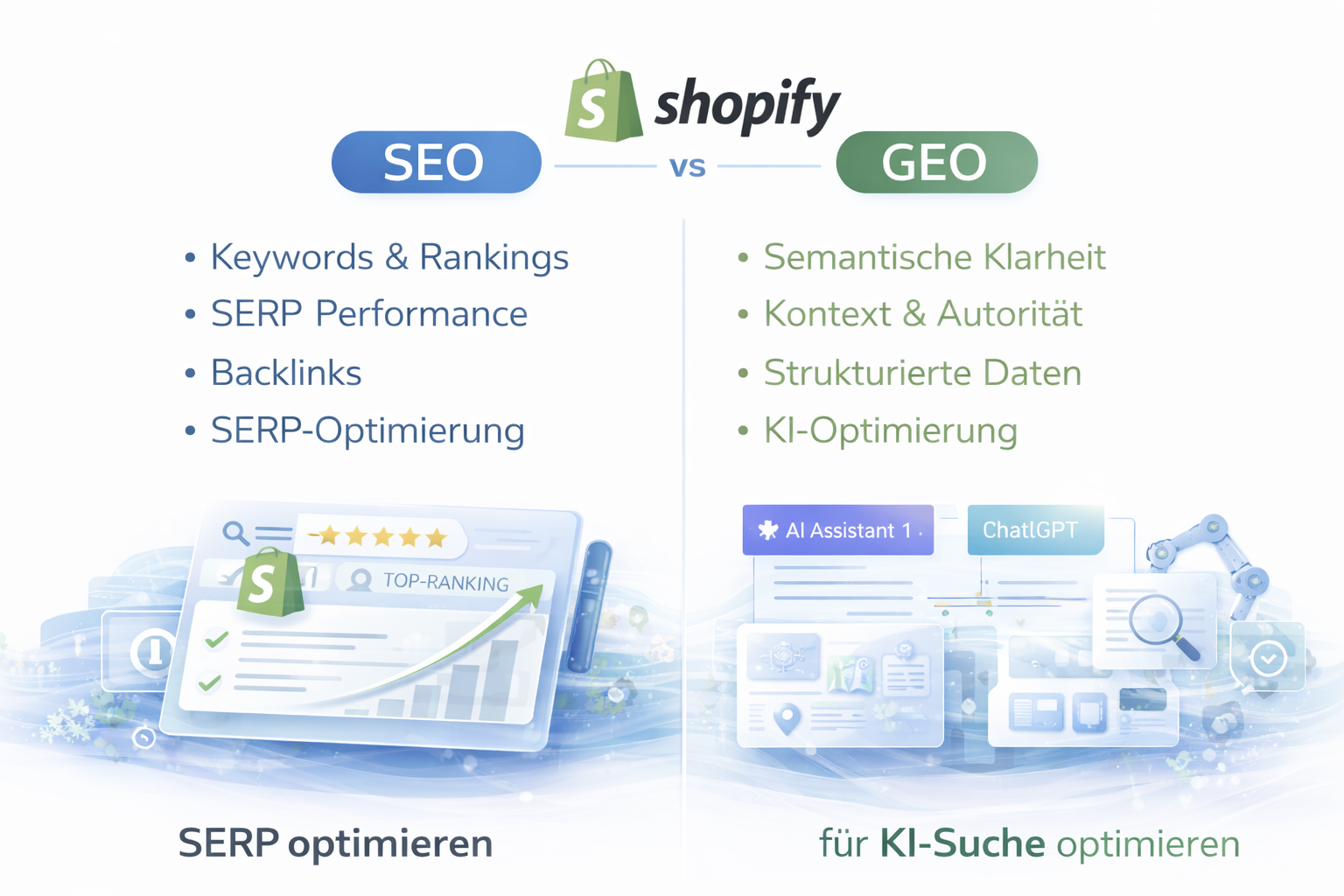
The difference between SEO and GEO

SEO optimized for:

  • Keywords
  • Rankings
  • backlinks
  • SERP positions

GEO optimized for:

  • semantic clarity
  • Context depth
  • thematic authority
  • structured information
  • citable content

Longtail keyword potential:

  • Optimize Shopify Geo
  • Generative Engine Optimization Shopify
  • Optimize Shopify for AI search
  • Increase Shopify visibility in ChatGPT

How AI systems select content

Generative systems prefer content that:

  1. are clearly structured
  2. Go thematically deep
  3. are professionally consistent
  4. Does not contain contradictions
  5. appear trustworthy

For Shopify stores, this means:

Product pages alone aren't enough.

You need:

  • counsels
  • guides
  • Explanatory article
  • faqs
  • glossaries
  • structured comparative content

Geo strategy for Shopify in detail

1 ️ Semantic clarity instead of keyword stuffing

AI systems work context-based.

A text like:

“Optimize Shopify SEO with Shopify SEO tips for Shopify SEO ranking”

will hardly provide any added value.

Clearly structured content is better with:

  • defined terms
  • logically structured sections
  • clear reasoning

2 ️ Build content clusters 🧠

A single article is not enough.

If you want your Shopify store to be considered an authority, it needs:

  • thematic depth
  • internal linking
  • consistent technical terms

example:

Shopify SEO cluster could include:

  • Shopify SEO basics
  • Shopify E-E-A-T
  • Shopify technical SEO
  • Optimize Shopify load time
  • Shopify Geo Strategy

The stronger the cluster, the higher the likelihood of being included in AI responses.

3 ️ Structured data & technical basis ⚙️

Even though AI systems process content differently, they help:

  • Schema markup
  • FAQ markup
  • structured product data
  • clean HTML structure
  • clear H hierarchies

Shopify offers good conditions here — if themes are cleanly developed.

4 ️ Build authority & citability

AI systems prefer content that:

  • are referenced frequently
  • are located on credible domains
  • contain clearly formulated statements

Instead of generic statements such as:

“Shopify is good for SEO”

better:

“Shopify offers a solid technical basis for sustainable SEO thanks to its clean URL structure, integrated SSL encryption and mobile optimization. ”

Concreteness increases the likelihood of citations.

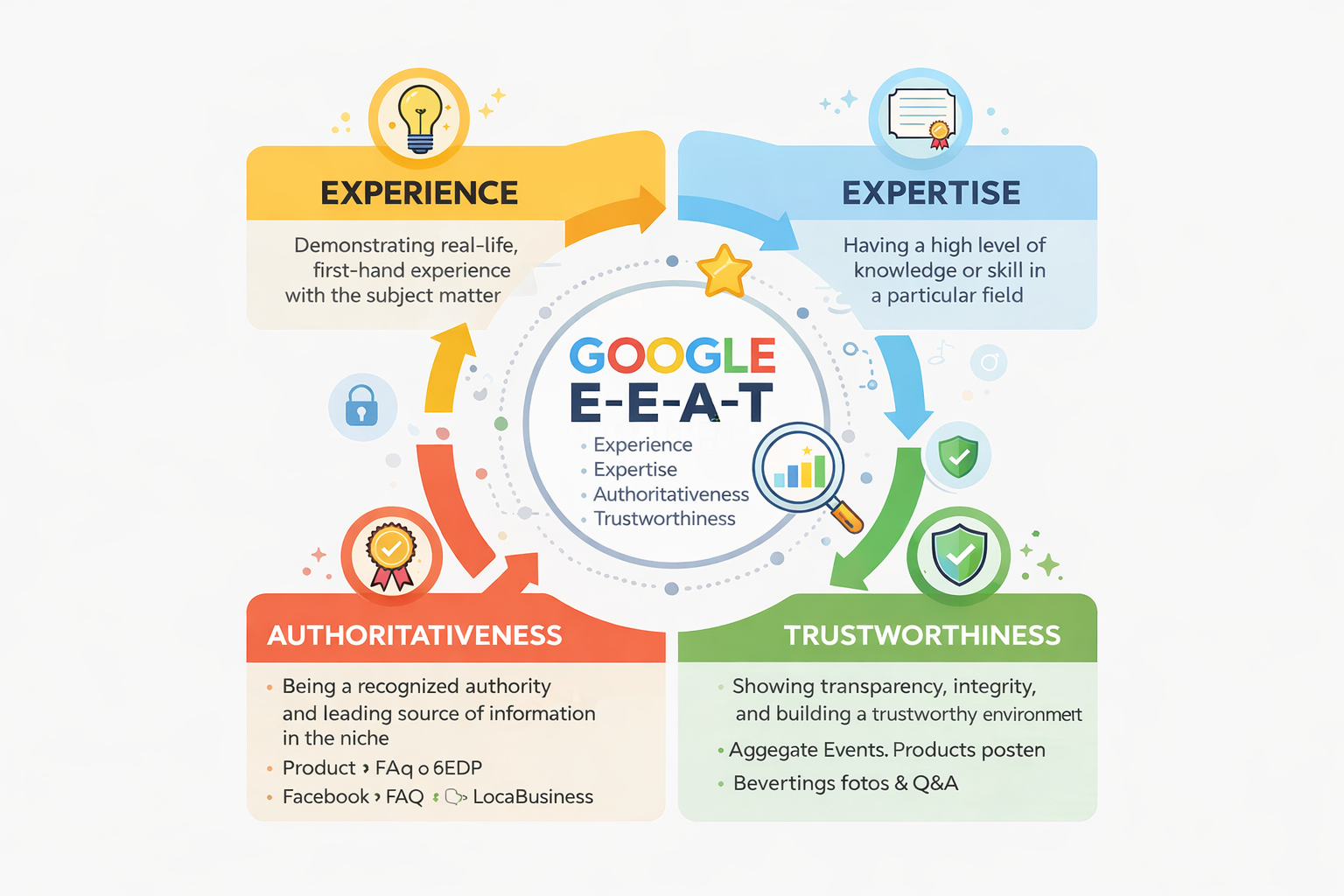
GEO & E-E-A-T belong together 🔒

Without E-E-A-T, there is no GEO.

AI systems prioritize content with:

  • recognizable expertise
  • consistent reasoning
  • transparent sender
  • clear structure

A Shopify store with real specialist authority has significantly higher chances of appearing in generative answers.
Common Shopify GEO 🚫 mistakes

Many shops:

  • publish product texts only
  • do not have an editorial area
  • do not build up thematic authority
  • refrain from internal structure
  • rely exclusively on performance marketing

This results in short-term revenue — but long-term invisibility in AI systems.

Why GEO is relevant now

Generative systems will:

  • more integrated with Google
  • integrated into e-commerce research
  • used as a buying advisor

Anyone building a brand with Shopify today not only has to optimize for Google — but also for AI-powered search systems.

Conclusion: Shopify GEO secures the future

SEO brings traffic.
GEO brings visibility to answers.

If you want to remain visible with Shopify in the long term, you should:

  • build thematic authority
  • Develop structured content
  • Strengthen E-E-A-T
  • Plan content strategically

GEO is not a trend.
It is the next evolutionary stage of organic visibility.

Visibility doesn't end with Google.

If you want to know how prepared your Shopify store is for AI search systems and generative answers, we'll analyze your structure, content, and authority holistically — from SEO to GEO.

👉 Strategically develop Shopify SEO & GEO with UNHYDE

👉 Discover our Shopify services

Shopify SEO 2026: What really ranks — and what you can save yourself
Shopify SEO Guide: How to optimize your store with JSON-LD, Structured Data & Liquid Templates
Shopify SEO with E-E-A-T: How to rank on Google in the long term with Experience, Expertise, Authoritativeness & Trust
Shopify UX optimization: product pages, checkout, and A/B testing for higher conversion rates
Customizing Shopify Themes with Liquid, HTML & CSS — The Complete Developer Guide
Optimizing Shopify Checkout: The 12 Most Common Conversion Killers (and How to Get Rid of Them)
UNHYDE•UNHYDE•UNHYDE•UNHYDE•UNHYDE•UNHYDE•