On paper, many Shopify stores do a lot of things right.
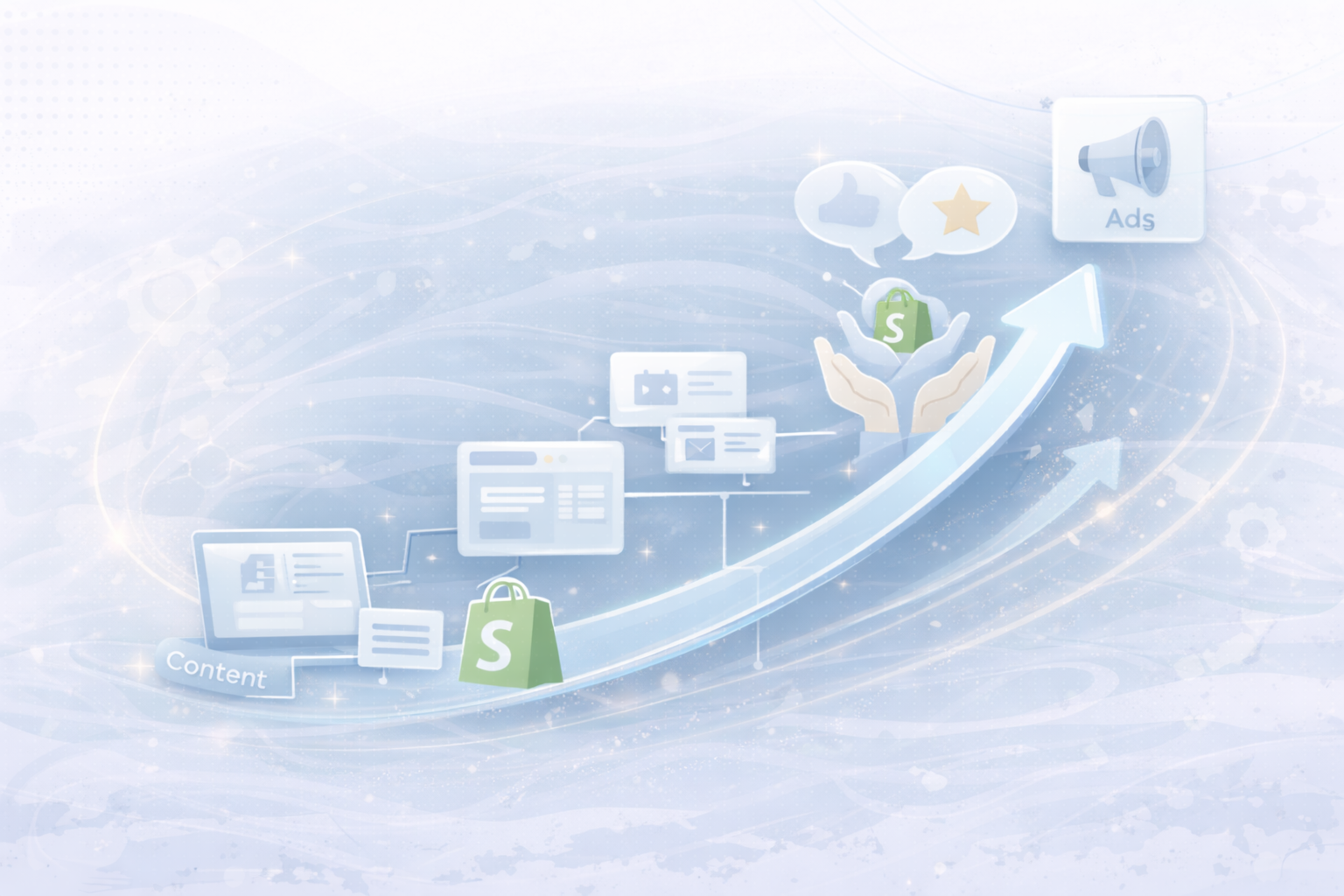
The design is modern. products are good. Ads are running. Social media is active. And yet one thing doesn't happen: sustainable organic growth.
No stable SEO traffic. No continuous rankings. No predictable visibility.
This is not an isolated case. Our experience shows: The majority of Shopify stores remain permanently dependent on paid traffic — not because Shopify would be unsuitable, but because growth is misunderstood.
.png)
Shopify 2026 provides an extremely solid technical basis:
clean infrastructure, good performance, stable scaling.
If shops still don't grow, it's almost always due to one of these points:
Organic growth is not a feature that you “activate”. It is the result of a interplay.
One of the most common thinking mistakes:
SEO or content is called alternative Seen to ads.
In practice, this means:
Organic growth doesn't work that way.
SEO is not a campaign channel, but infrastructure. If you only invest in ads, you rent reach — if you invest in SEO, you build up ownership.
Many stores have blogs.
Most of them barely help Google — and users — any more.
Typical issues:
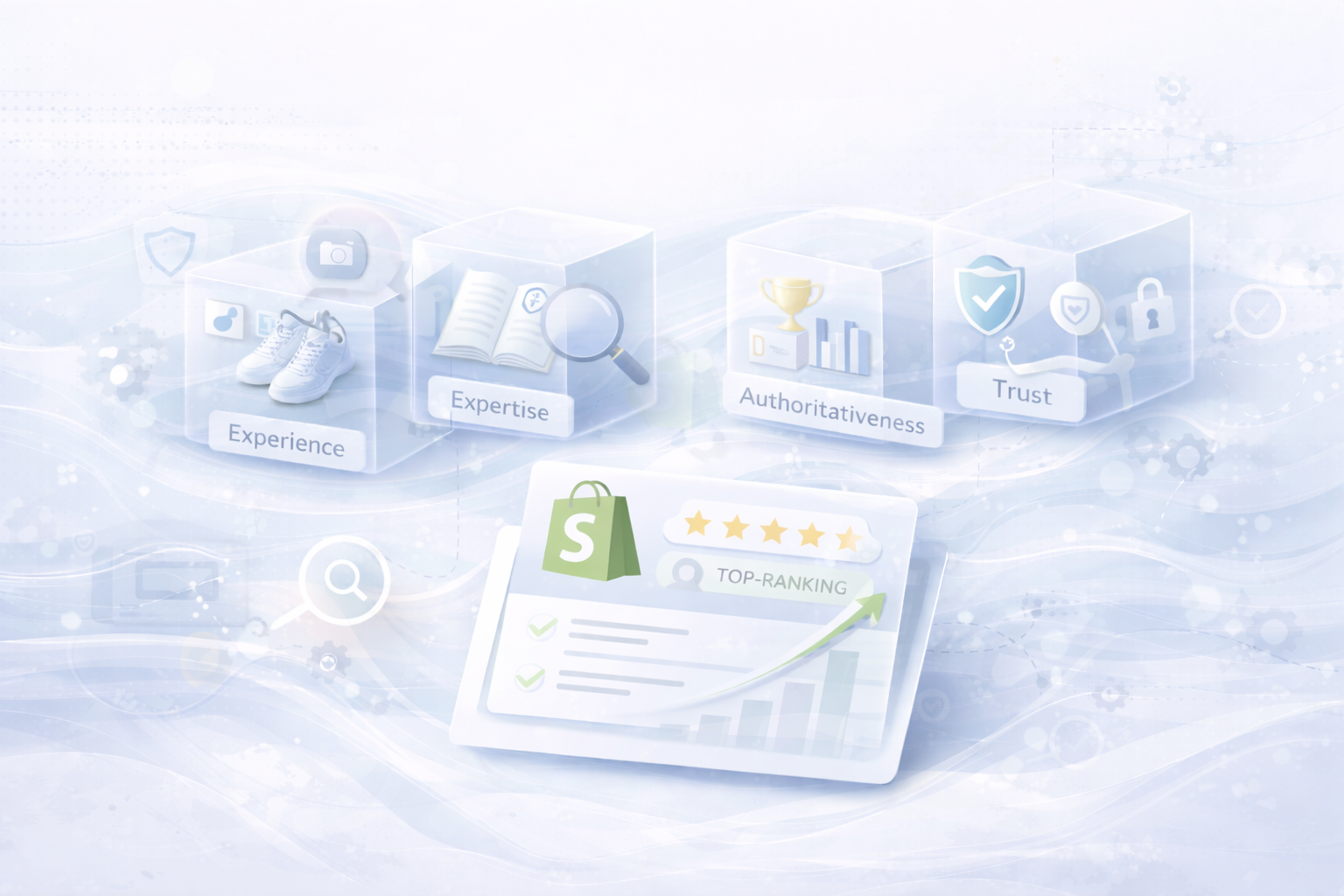
Google reviews today Topic authority, not individual pages.
When content isn't embedded in a system, its effect fizzles out — no matter how well written it is.
Category pages are one of the most popular e-commerce sites The most important levers for organic growth — and at the same time one of the worst-used.
Instead, we often see:
Categories are exactly where search intent, orientation and willingness to buy meet.
Performance, Core Web Vitals, clean structure — all of this is important.
But technology alone does not generate growth.
What we often see:
Technology is the foundation — not the building.
Google doesn't just measure content, it also measures responses:
If a shop is found but does not offer a good user experience, it loses visibility in the long term.
SEO and UX are no longer separable in 2026.
Sustainable growth in Shopify e-commerce happens when several levels work together:
The decisive factor: Everything contributes to the same goal.
No more pages.
No more keywords.
But more lucidity.
SEO is often assessed after 3—6 months.
The problem: That is exactly when it starts to have an effect.
Organic growth is:
Anyone who gives up too early never sees the compound interest effect.
Most Shopify stores don't fail because of a lack of potential, but because of a lack of strategy.
Organic growth is not generated by individual measures, but by clear decisions:
Whoever answers these questions honestly and consistently implements them builds something that lasts — even when ads become more expensive or platforms change.
Many Shopify stores have potential — but no clear direction.
We help brands build a functioning growth system from technology, content and UX.

Get in touch
contact now