Hardly any e-commerce trend is currently being discussed as intensively as headless commerce. Faster load times, maximum design freedom, better scalability — the promises are great.
At the same time, millions of successful shops continue to rely on classic Shopify. The decisive question is therefore not whether Headless is better, but For whom.
.png)
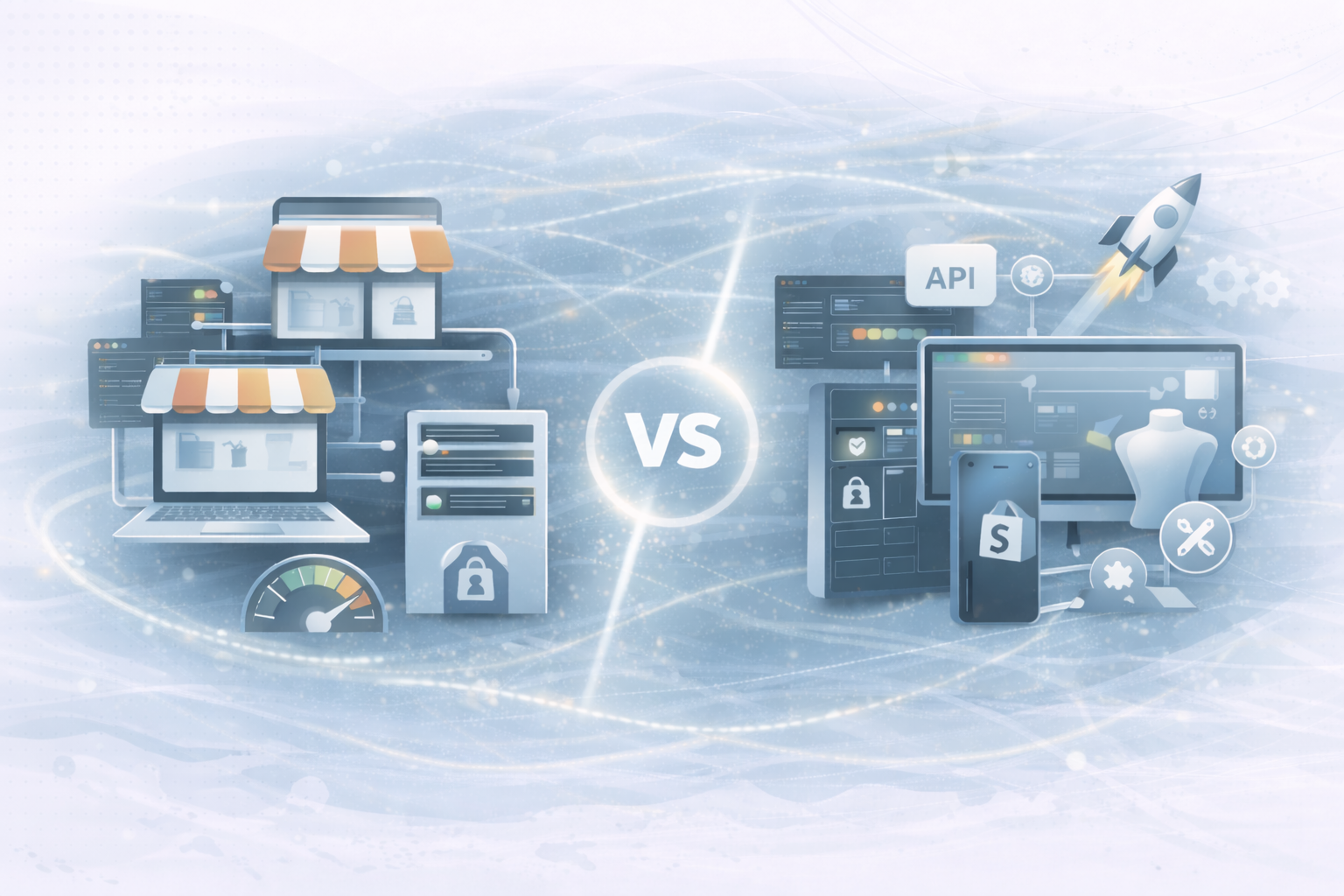
In the classic Shopify setup, frontend (theme) and backend (shop logic, products, checkout) are closely linked.
Headless Commerce separates these layers:
👉 Result: More flexibility — but also more complexity.
Headless is not an end in itself. Used correctly, it offers clear advantages:
Technical advantages:
Strategic benefits:
Fast-growing brands in particular benefit from this freedom.
What is often concealed: Headless is no plug and play.
Typical challenges:
For small or medium-sized shops, Headless can be fast Overengineering become.
A cleanly optimized Shopify store can be extremely powerful — without headless.
Classic Shopify is particularly suitable for:
With optimized performance, clean UX and reduced app stack, very high sales can be achieved even without headless.
A simple rule of thumb:
Headless is worthwhile if:
Classic Shopify is enough if:
The right decision is always strategically, not technical.
Headless commerce is powerful, but it's not a panacea. Shopify offers both worlds in 2026: a stable, fast standard setup and the ability to switch to headless when needed.
If you know your goals, you make better decisions — and save time, money and nerves in the long term.
Would you like to know where your Shopify shop is creating unnecessary hurdles?
👉 Here you can find our Shopify services
We optimize Shopify stores psychologically based, user-centered and data-based.

Get in touch
contact now