Introduction: Why Shopify developed its own headless frontend

E-commerce is becoming faster, more complex and more technical. Classic theme systems are increasingly reaching their limits when it comes to performance, individualization and scaling.

With Shopify Hydrogen Shopify is responding to exactly this development: a modern front-end framework, developed specifically for headless commerce with Shopify.

But Hydrogen isn't a replacement for classic Shopify themes — but a Tools for very specific requirements.

1 ️ ⟶ What is Shopify Hydrogen?

Shopify Hydrogen is a frontend framework, which is based on modern web technologies and was developed specifically for use with Shopify APIs.

In short:

  • Shopify remains the commerce backend
  • Hydrogen takes over the frontend
  • Content, products & checkout are integrated via APIs

Hydrogen makes it possible to high-performance, individually designed front ends to build — independently of the classic theme system.

2 ️ ⟶ What are the benefits of Shopify Hydrogen?

Hydrogen is particularly strong when performance and UX are decisive.

Key benefits:

🚀 Performance

  • Extremely fast load times
  • Optimized server-side rendering
  • Ideal for Core Web Vitals

🎨 Design freedom

  • No theme limits
  • Individual UX concepts possible
  • Tailored customer journeys

🧩 Modern architecture

  • Clean code structure
  • Future-proof frontend
  • Ideal for scaling systems

Hydrogen can be a real competitive advantage, especially for fast-growing brands.

3 ️ Drawbacks & Challenges of Shopify Hydrogen

As powerful as hydrogen is — it also entails new requirements.

Typical challenges:

  • Higher development costs
  • More maintenance & technical operation
  • Dependence on experienced developers
  • More complex SEO & tracking setups

Hydrogen is not a construction kit, but a developer tool. Without a clear strategy, this quickly becomes a cost factor instead of a growth driver.

4 ️ ⟶ Who is Shopify Hydrogen really worthwhile for?

Hydrogen is not the right choice for every shop.

Hydrogen is particularly worthwhile for:

  • Brands with high traffic
  • International e-commerce projects
  • Shops with a strong focus on performance
  • Companies with individual UX requirements
  • Tech-savvy teams with a long-term perspective

Hydrogen is not really worthwhile for:

  • Small shops or MVPs
  • Quick go-to-market projects
  • Teams without a technical setup
  • Standard D2C stores with a focus on marketing

5 ️ Shopify Theme, Headless or Hydrogen — How do you decide?

The decision is not binary, but strategic.

Rule of thumb:

  • Shopify theme: Fast, efficient, cost-effective
  • Headless without hydrogen: Maximum freedom, but high effort
  • Hydrogen: Optimized middle ground for high-performance headless commerce

Many successful shops start off in the classic way — and only switch to Hydrogen later when growth and requirements increase.

Conclusion: Shopify Hydrogen is a scaling tool — not a standard

Shopify Hydrogen is not a must, but a Option for ambitious e-commerce projects. If you think strategically about performance, UX and scaling, you can achieve enormous benefits with Hydrogen.

However, anyone who simply wants to “just sell” is often better off with an optimized classic Shopify setup.

👉 Discover our Shopify services

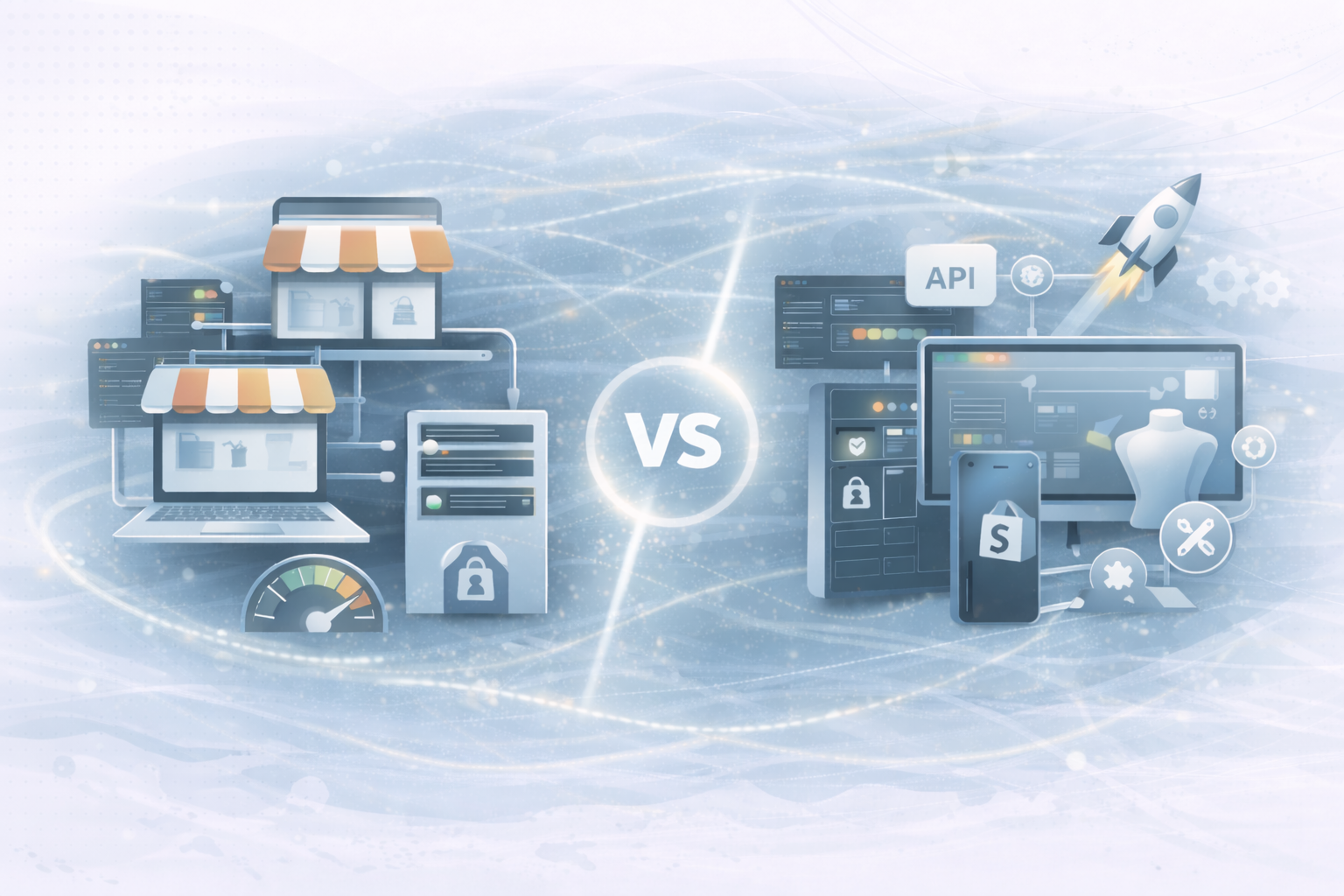
Shopify vs. headless commerce: When is the switch really worthwhile — and when not?
Extend Shopify headers: Activate inline search bar via JSON toggle and expand with live suggestions
Shopify Metafields: Implement dynamic product data with Liquid & JSON
Customizing Shopify Themes with Liquid, HTML & CSS — The Complete Developer Guide
Shopify Horizon Theme: Modular, pixel-perfect design now also for retailers
Shopify store slow? How to sustainably optimize page speed, performance and load times
UNHYDE•UNHYDE•UNHYDE•UNHYDE•UNHYDE•UNHYDE•