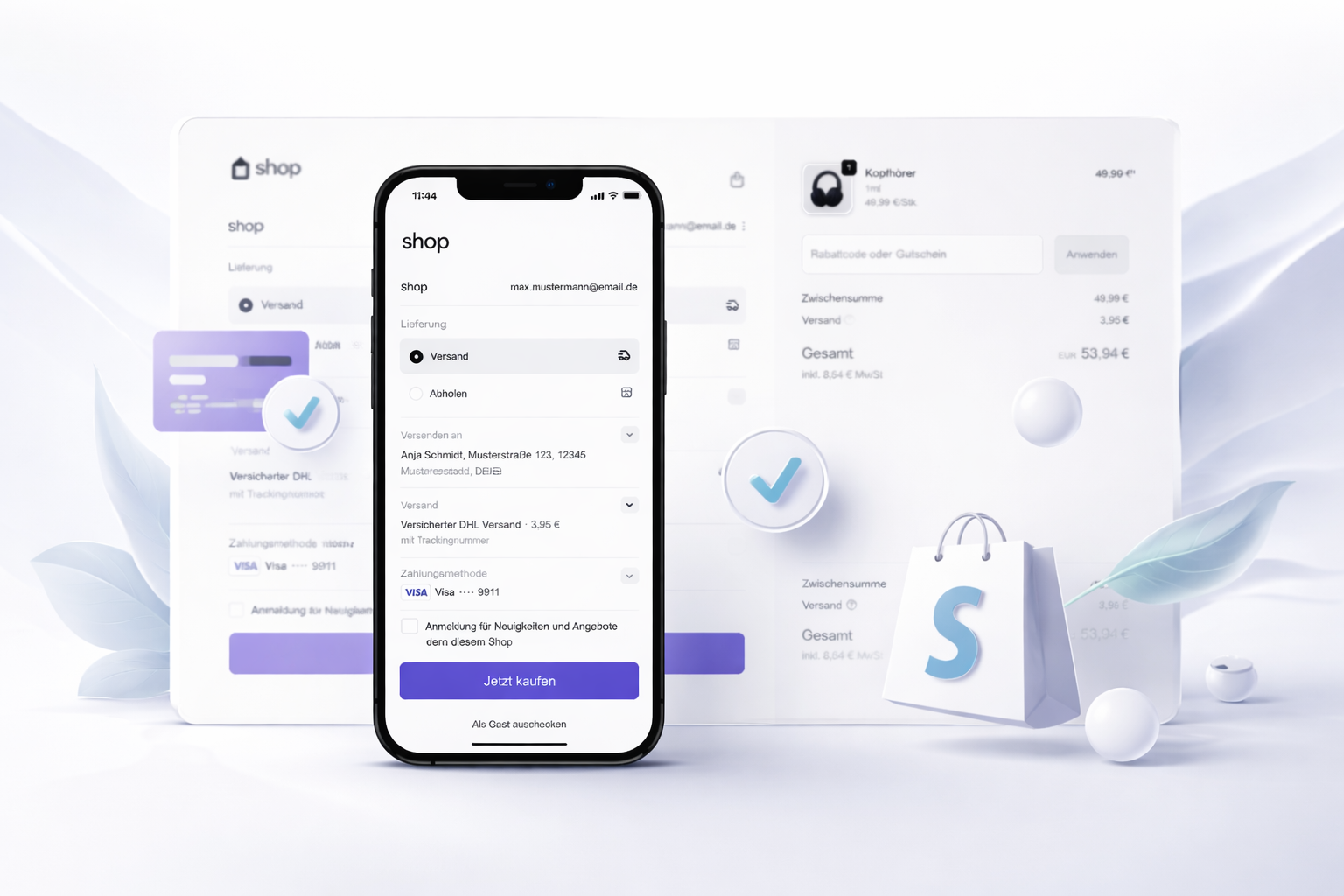
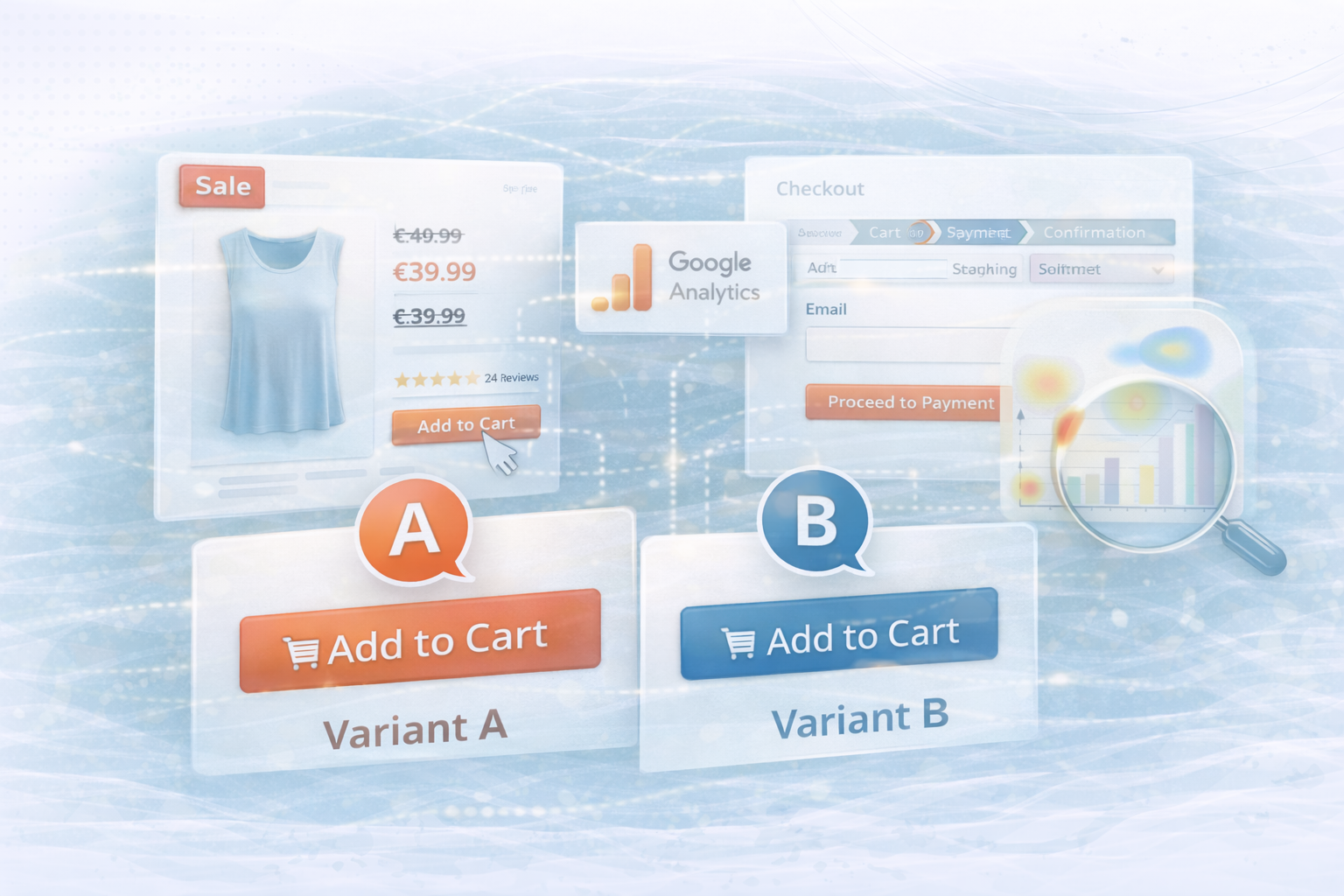
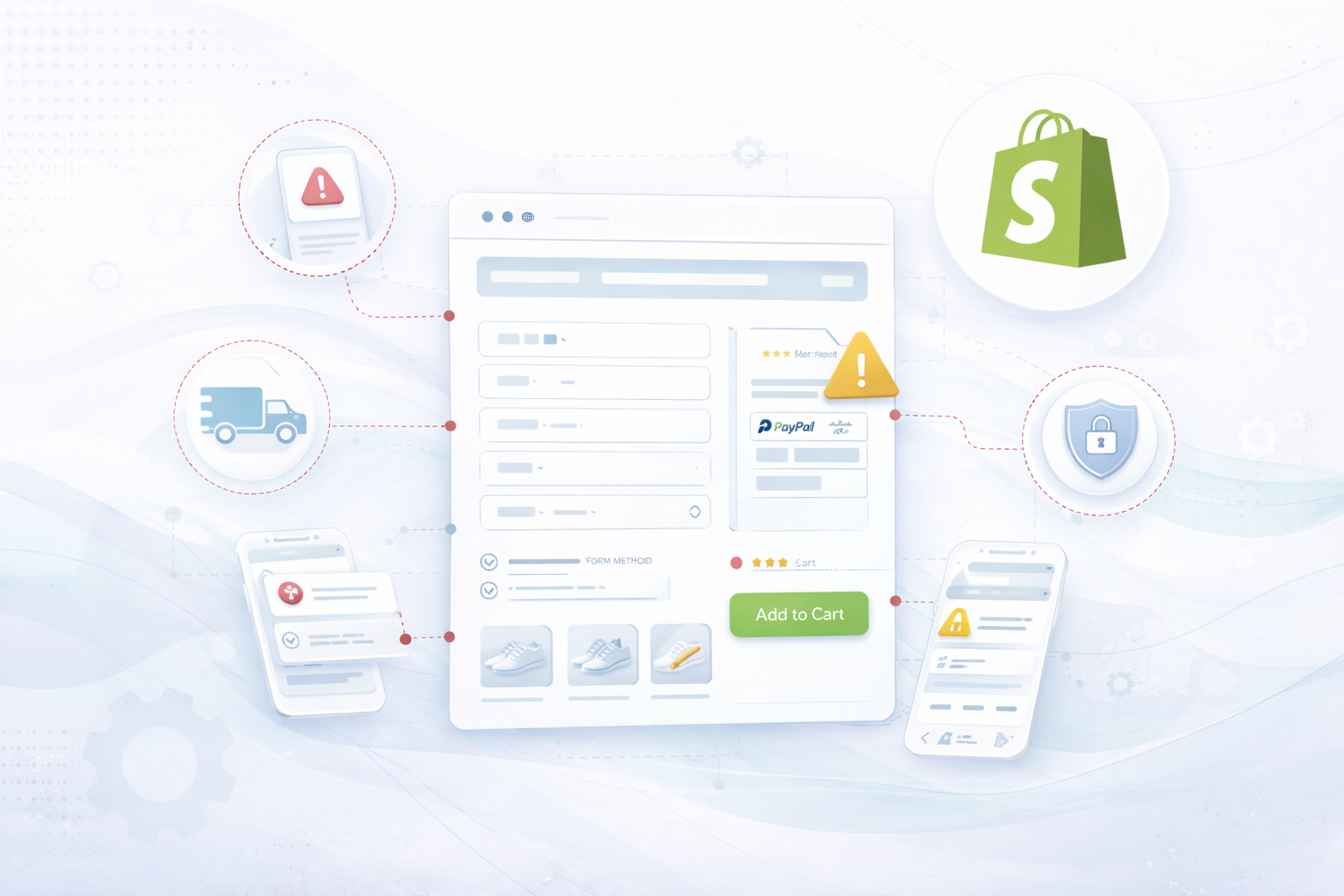
Shopping cart abandonments are among the biggest revenue losses in e-commerce.
On average, 60-80% of all users leave the checkout before they buy.
But most Shopify stores only analyze in a superficial way:
“Perhaps the price is too high. ”
“PayPal may be missing. ”
The truth is more complex.
Shopping cart abandonments are rarely a single problem — but almost always a structural one.
Many retailers only optimize the last step — the “Buy Now” button.
But abortion often starts much earlier:
Checkout is just the point where uncertainty becomes apparent.
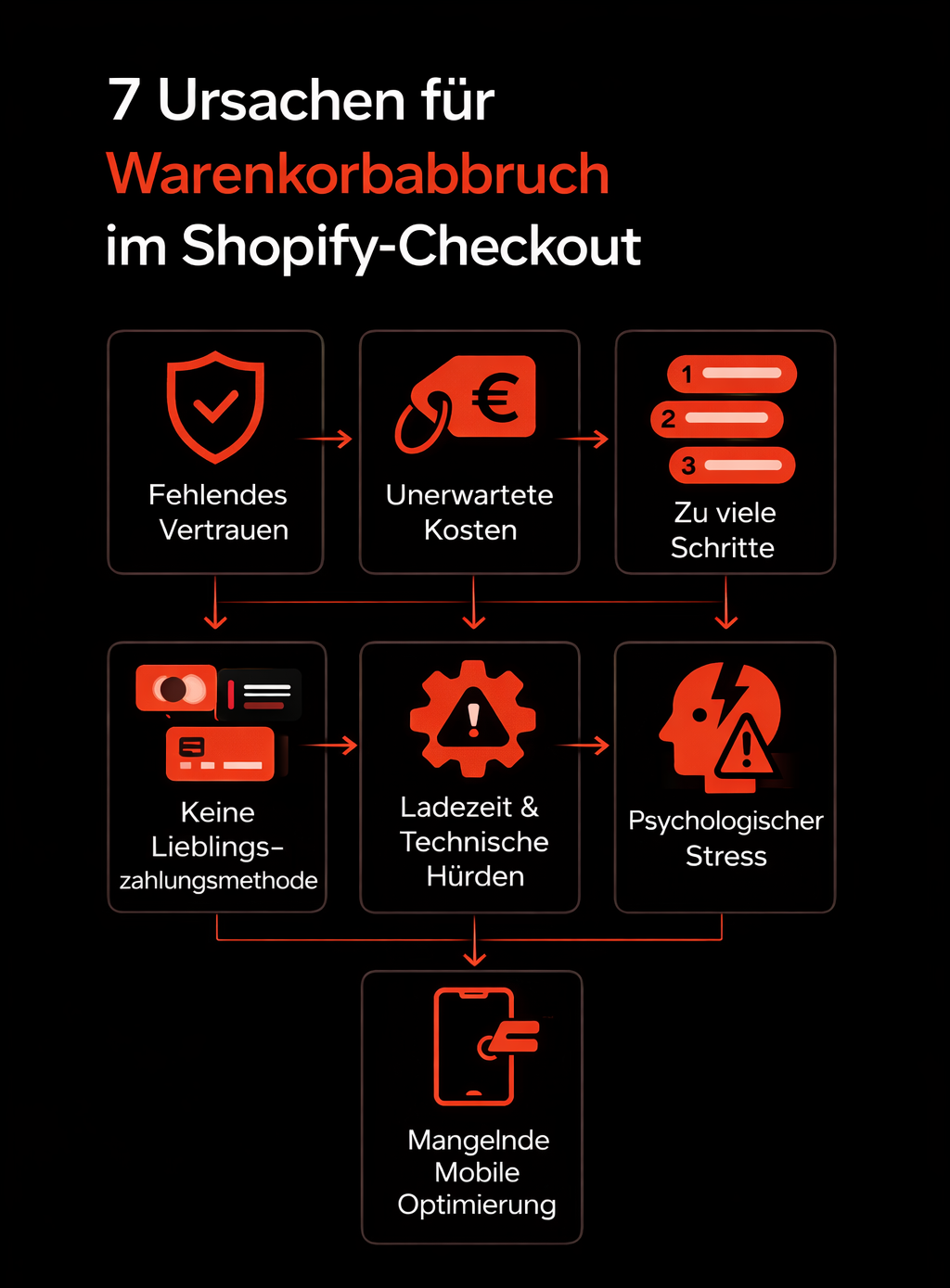
Trust is crucial in the checkout process.
When customers suddenly:
Uncertainty is created.
Especially with Shopify shops without strong brand recognition, every doubt is reinforced.
Longtail keyword potential:
“Shipping is calculated at checkout. ”
That sentence alone can destroy conversion.
Transparency should already be on:
be communicated.
Unexpected costs are one of the most common reasons for shopping cart cancellations in the Shopify checkout.
Shopify offers a very streamlined standard checkout.
But problems arise when:
Reduction increases conversion.
A checkout is not a marketing venue.
It is a place of decision.
Not every target group uses the same payment methods.
In Germany, the following are particularly relevant:
If the preferred option is missing, the probability of abandonment increases massively.
Longtail keyword:
Loading time is conversion.
When the checkout:
He loses trust.
Performance is crucial, especially for mobile users (often over 70% traffic).
Too many variants.
Too many add-ons.
Too many cross-sells.
Cognitive load leads to procrastination.
Many Shopify stores are still trying to upsell at checkout — that's risky.
Reduction beats aggressiveness.
A checkout that looks good on desktop can fail on the go.
problems:
Mobile UX is decisive for revenue.
Real optimization happens on three levels:
Conversion optimization is not a button color.
It is architecture.
Compared to many other systems, Shopify checkout is:
The problem is rarely with the system — but with the implementation.
If 70% of your users drop out, that doesn't mean:
“People don't buy. ”
It means:
“The structure is not completely convincing. ”
If you want to reduce Shopify shopping cart abandonments, you must:
That's when conversion increases — sustainably.
If you want to know why users are jumping off from your Shopify checkout and where there is concrete conversion potential, we analyze your shop holistically — from product page to payment completion.

Get in touch
contact now