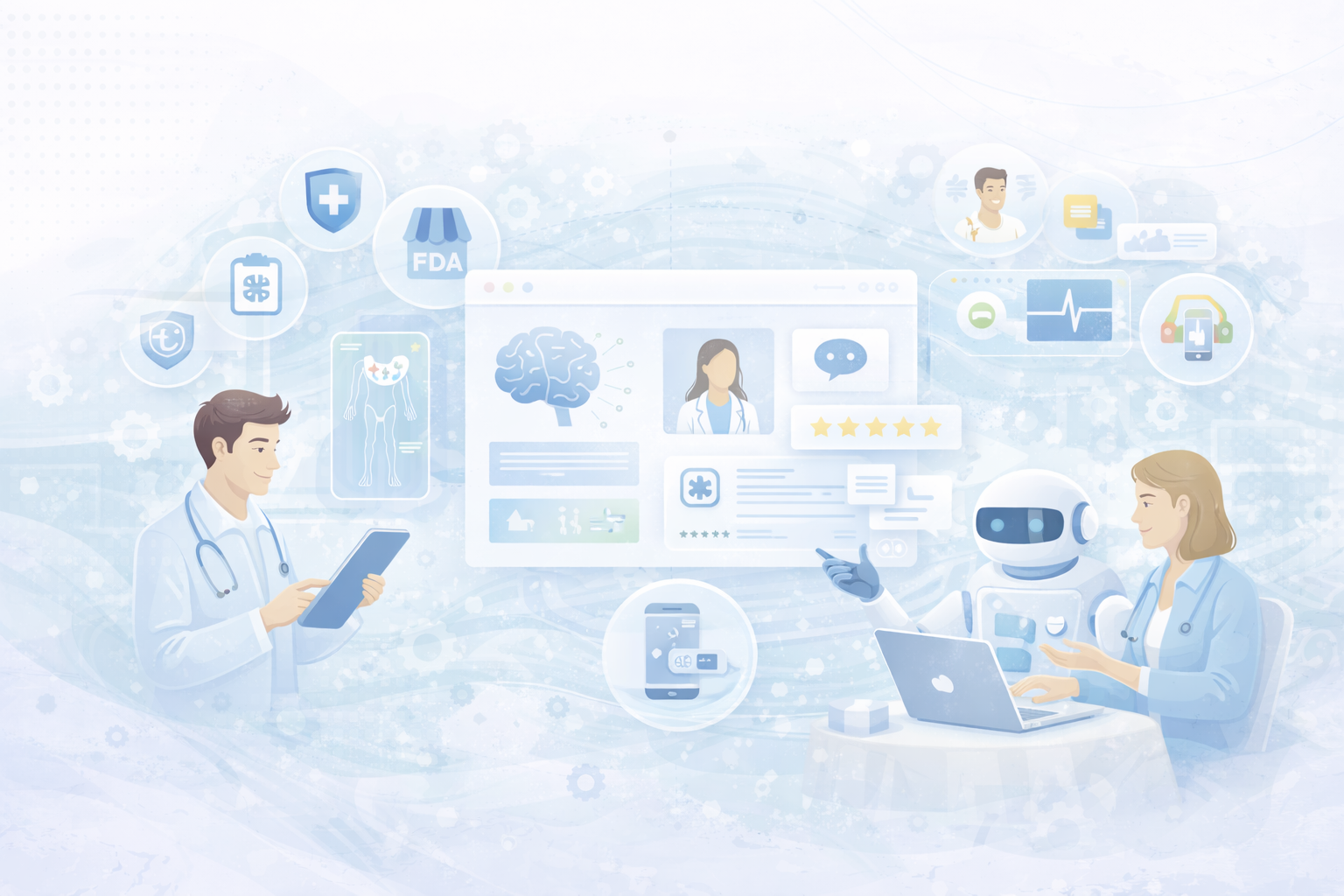
The integration of Artificial intelligence (AI) In healthcare, the way medical services are delivered is rapidly changing.
From predictive analytics via robot-assisted surgery up to personalized treatment recommendations — AI makes healthcare more efficient, more accessible, and more individual.
Play in this dynamically growing market websites a central role: They create trust, strengthen brand perception and serve as a digital interface between technology providers, doctors, patients and investors.
But why are websites so important for AI healthcare companies? Here are the key findings and data.
According to a report from Accenture Will the global market for AI in healthcare be up to 2026 around 45 billion US dollars achieve — with an annual growth rate (CAGR) of 44.9%.
This enormous growth is leading to increasing competition: more and more companies want to be visible in the digital healthcare market.
One SEO-optimized website This makes it a decisive tool for attracting attention — especially because loud GE Capital Retail Bank roundly 80% of consumers research products or services onlinebefore they make a decision.
For AI healthcare companies, this means that anyone who is well found online gains valuable market shares — especially when doctors, clinics or patients are specifically looking for AI-based healthcare solutions search.
Trust is the most important success factor in healthcare — especially when it comes to using AI.
Loud deloitte believing 62% of healthcare executivesthat AI will be decisive for their organization's growth in the coming years. However, patients and doctors have reservations, particularly with regard to Data security, accuracy, and ethical standards.
Studies show that websites with transparent content and meaningful references upto 52% higher interaction achieved by healthcare professionals.
Since the COVID-19 pandemic Telemedicine has finally become established. Loud Grand View Research Should the global telemedicine market of 83.5 billion US dollars (2022) upon 455.3 billion US dollars by 2030 grow.
According to studies, prefer 77% of patientsto book appointments online, and 64% choose providers who offer digital services such as offering telemedicine or online consultations.
Without a technically stable, functional website, AI healthcare companies lose valuable contact points — and therefore potential users.
About 50% of website traffic in the healthcare sector It now comes from mobile devices.
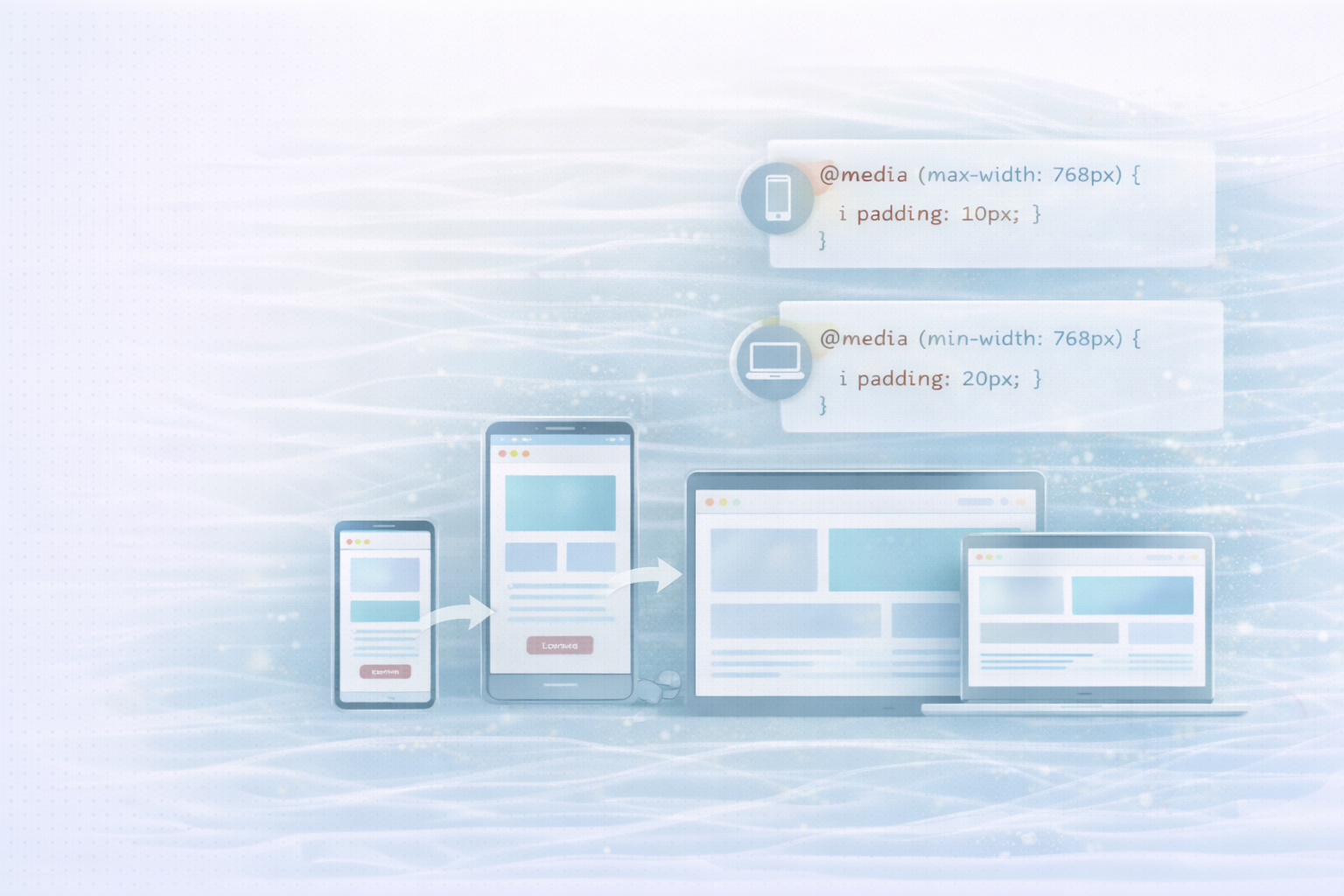
For AI healthcare companies, this means: A mobile, responsive and fast website It's not an option, it's a duty.
Especially in a medical context — for example when using symptom analyses or patient portals — users expect instant access and smooth performance.
According to a study by google rely 53% of users a page when it Charges for more than three seconds.
A modern healthcare interface must therefore not only be visually convincing, but also technically perfect on smartphones and tablets work.
AI and data are inseparable in healthcare — and so are websites.
Companies can, through targeted web analytics evaluate the behavior of their visitors and thus Usability, navigation and conversion rates optimize.
Loud adobe infringe 38% of users Stop visiting a website when they confusing or unattractively designed is.
AI healthcare companies should therefore Data analysis and A/B testing use to continuously improve user experiences.
Another success factor: AI-based chatbots. They provide real-time assistance with questions, appointments or product information.
According to studies, websites with chatbot integration score up to 30% more user interaction — a clear competitive advantage in a data-driven environment.
The healthcare sector is on the cusp of a new era — and AI is their central driver.
But in order to build trust, communicate expertise and effectively offer digital services, you need a Website, technology, transparency and user experience connects with each other.
A high-performance, SEO-optimized and mobile-friendly website is today the basis for every successful AI healthcare company — from startups to international market leaders.
UNHYDE is a web development agency from Munich, specialized in High-performance web design, UX strategies and digital brand development. As Shopify Partner Agency We implement high-performance, tailor-made web solutions for international brands.
Our goal: functional design, strong performance and sustainable growth through sophisticated web development.

Get in touch
contact now