Introduction: The start page as a decision-making tool — not as a self-presentation

Hardly any other page is discussed as intensively as the homepage.
At the same time, hardly any page is overloaded, watered down or incorrectly prioritized as often.

Many homepages want everything at the same time:

  • informing
  • impress
  • selling
  • stating
  • Build trust

The result is often the opposite of clarity.

A good start page has not many tasks, but a central function:
Let users understand quickly Where they are, who this is for and what's next.
What a homepage must do — and what not

A start page doesn't have to:

  • explain all services in detail
  • formulate every argument
  • address all target groups at the same time

That is not their job.

A start page must:

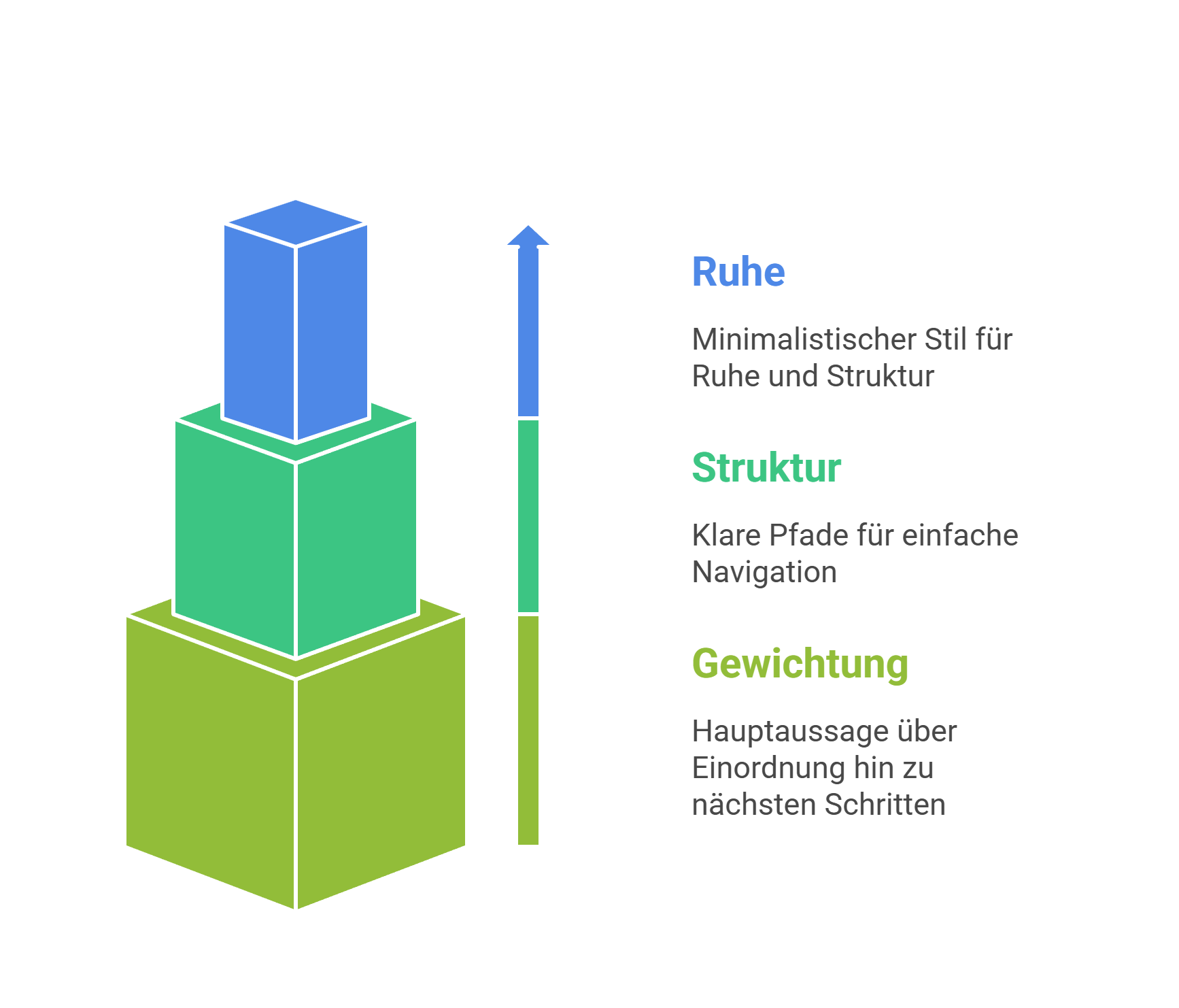
  • Provide orientation
  • Establish relevance
  • Build trust
  • Take you to the next meaningful step

Anything that doesn't support this goal is ballast.

The most common mistake: The start page starts with the company

Many homepages start with:

  • visions
  • Mission Statements
  • superlatives
  • internal perspectives

For users, however, there is another question in the first few seconds:
“Am I in the right place? ”

If this question isn't answered right away, the rest doesn't matter.

Good homepages don't start with the company —
but with the Problem or need of the target group.

Clarity beats creativity

A common misconception:
The start page must be particularly creative.

The truth is:
The clearer a start page is, the better it works.

Clarity means:

  • intelligible language
  • specific statements
  • clear focal points
  • visible next steps

Creative effects, animations, or large images only make sense if they Support clarity — not if they're supposed to replace them.

What belongs on a good start page

A functioning start page answers four key questions in a short period of time:

  1. What is this about?
  2. Who is this relevant for?
  3. Why should I stay here?
  4. What can I do next?

This doesn't require deserts of text, but:

  • a clear main message
  • an understandable classification of benefits
  • visible elements of trust
  • logically placed options for action

Everything else belongs on subpages.

Trust is created by classification, not by assertion

Many homepages try to create trust by saying so:

  • “We are experts”
  • “We are market leaders”
  • “We stand for quality”

Such statements are interchangeable.

Trust is created by:

  • comprehensible content
  • specific examples
  • clear processes
  • intelligible language

A good start page shows like work is being done — not only that You work well.

What doesn't belong on a start page

In practice, we see the same elements over and over again that weaken home pages:

  • too many equivalent CTAs
  • long blocks of text without prioritization
  • unclear headlines
  • Buzzwords without meaning
  • Content that only makes sense internally

The more a start page has to explain, the less it works.

The start page is not a conclusion, but a start

A common misconception:
The start page must be convincing.

In reality, she must perpetuating.

Good home pages:

  • links to suitable subpages
  • invite you to deepen
  • give users control

They're not a pitch — they're an invitation.

Conclusion: Good home pages are quiet, clear and helpful

A good start page doesn't try to be everything.
She's trying The right thing at the right time to show.

When users understand after a few seconds:

  • What is it about
  • Whether this is relevant to them
  • How they can move on

Then the start page has served its purpose.

Everything else is an accessory.

A good start page doesn't explain everything — it leads correctly.
If you have the feeling that your website looks professional but barely generates any inquiries, it's worth taking a structured look from outside.

👉 Corporate websites with clarity & structure — UNHYDE

Optimize your Shopify product page: 15 elements that really bring in sales
Shopify UX optimization: product pages, checkout, and A/B testing for higher conversion rates
Shopify product analysis: More trust & conversions with real-time data and social proof
Shopify Custom Labels: Dynamic product labels with JSON Schema & Liquid — easy to control via theme editor
Shopify SEO 2026: What really ranks — and what you can save yourself
Shopify migration without loss of ranking: How to keep your SEO traffic stable
Customizing Shopify Themes with Liquid, HTML & CSS — The Complete Developer Guide
Shopify relaunch vs. creating a new shop: When is a relaunch really worthwhile
UNHYDE•UNHYDE•UNHYDE•UNHYDE•UNHYDE•UNHYDE•