For a long time, Shopify was considered a pure D2C platform. But with Shopify Plus, native B2B features, and extensible architecture, the picture has changed significantly.
More and more manufacturers, wholesalers and industrial companies are asking themselves the question today:
Is Shopify also suitable for complex B2B models?
The answer is yes — if the architecture and strategy are properly planned.
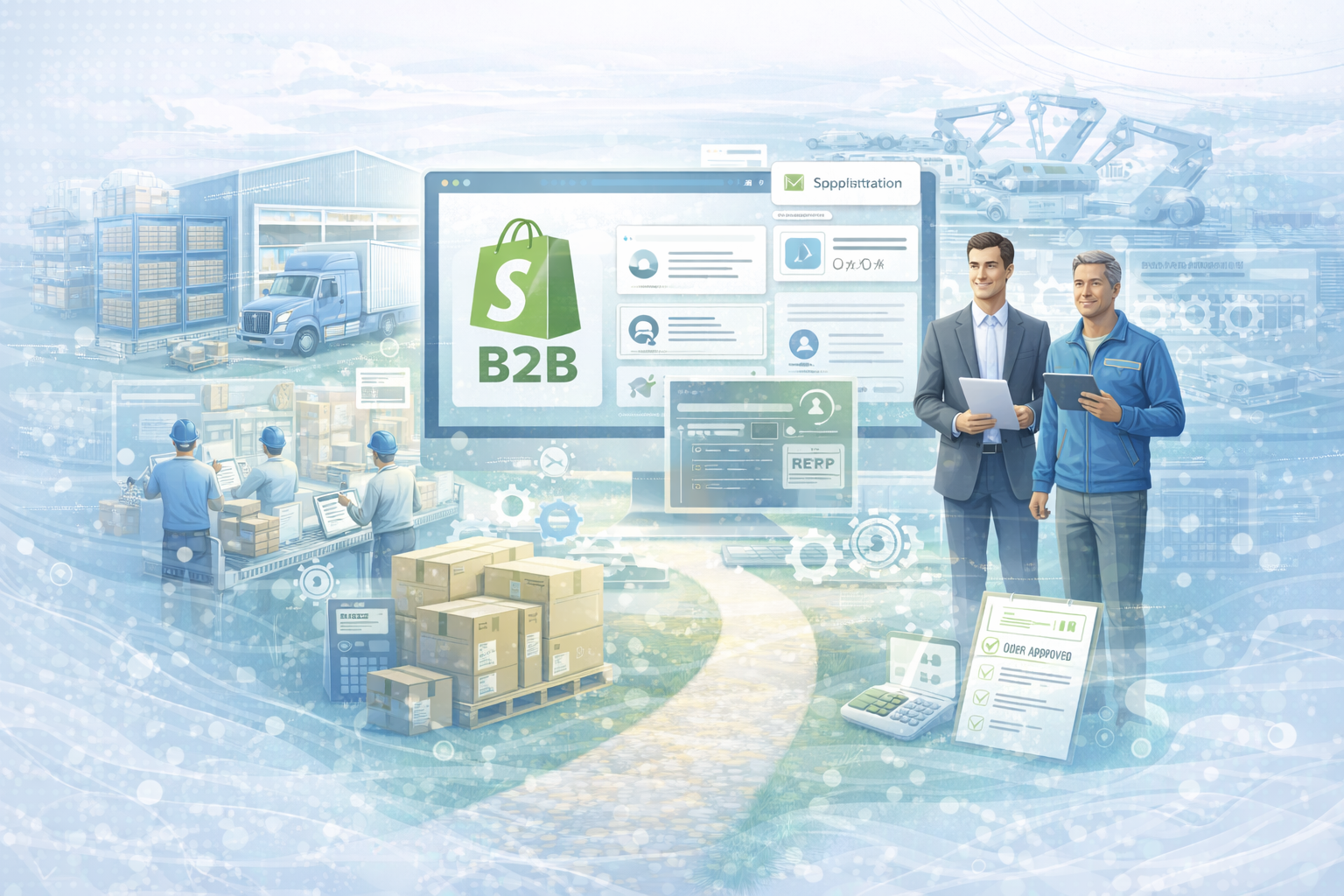
A Shopify B2B shop is not a classic online shop with net prices. It is a digital sales system with individual price logics, customer groups, ERP connection and structured approval processes.
B2B is structurally very different from D2C. Typical requirements are:
With Shopify Plus, many of these features can be implemented natively or via extensions.
The decisive factor is not whether Shopify can do that — but how cleanly the architecture is built.
Many medium-sized companies work in B2B with complex systems that have grown historically. These offer a high degree of flexibility — but often also generate high maintenance costs and slow development cycles.
Shopify takes a different approach:
The decisive advantage lies in scalability with reduced system load.
However, Shopify isn't the right solution for every B2B scenario. Highly individualized special processes can become complex — a clean analysis is crucial here.
A professional B2B shop is not just based on theme adjustments. It requires a well-thought-out architecture.
Typically, this includes:
A clear separation or intelligent combination strategy is crucial, especially for manufacturers with parallel retail business.
Architecture beats feature list.
.png)
The costs depend heavily on the level of complexity.
A simple B2B setup with customer groups and tiered prices is significantly cheaper than a system with:
Realistic budget frameworks in German-speaking countries often range between:
20,000€ and 60,000€, depending on system depth and integration costs.
The important thing is: A B2B shop is not a design project — but a sales project.
Many companies are trying to digitally represent their existing offline sales model 1:1. This leads to unnecessary complexity.
A successful Shopify B2B shop reduces processes, automates processes and creates transparency.
The biggest threat does not lie in the system — but in structures that are too complicated.
Shopify is particularly useful when:
Medium-sized manufacturers in particular benefit from the speed and modernity of the platform.
Are you considering digitizing your wholesaler or manufacturer distribution via Shopify?
We analyze your existing system landscape, review integration requirements and develop a scalable B2B architecture — tailored to your growth goals.

Get in touch
contact now