Why more and more manufacturers are selling directly to end customers

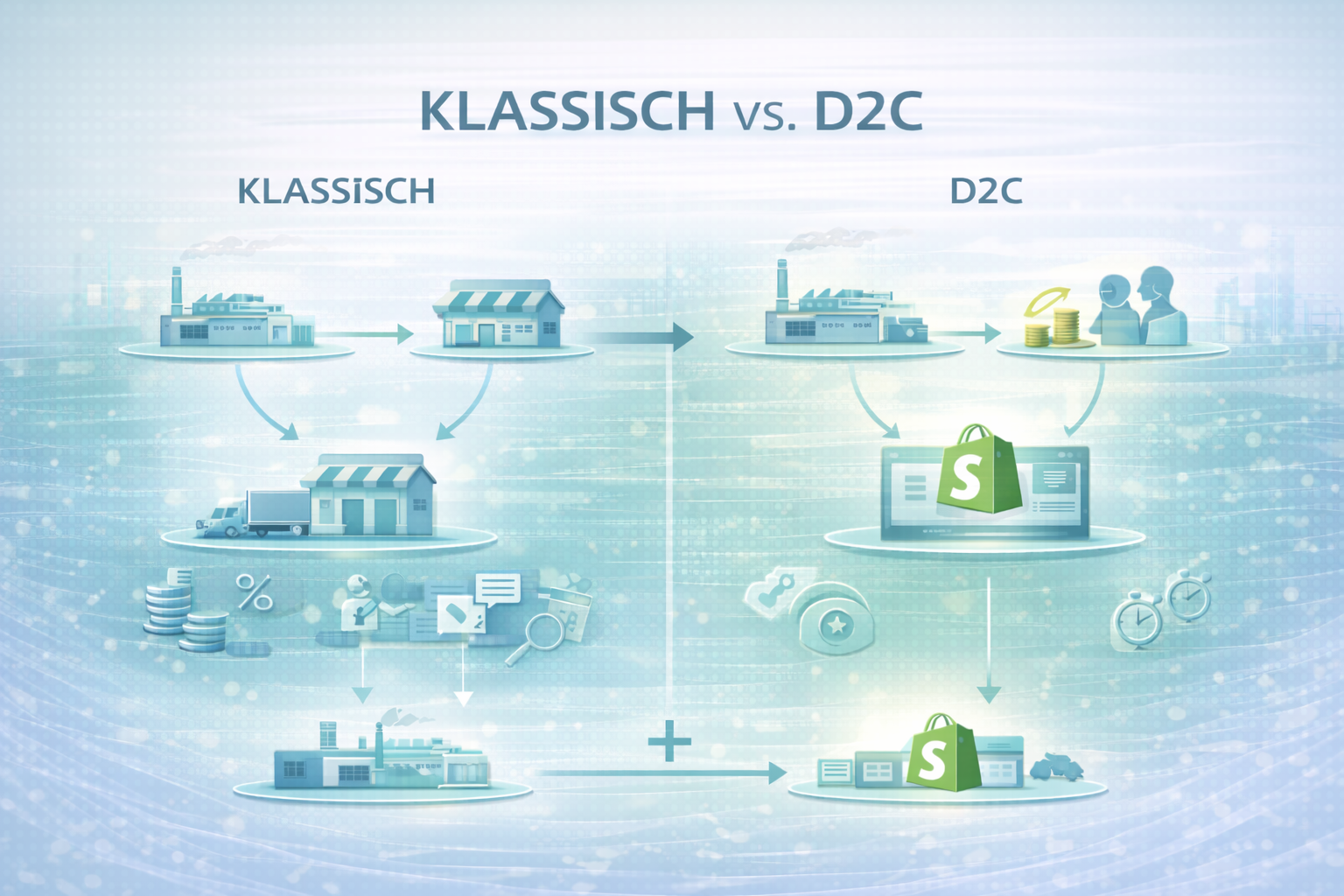
The model was clear for a long time:
Producers produce.
Distribute wholesalers.
Retailers sell.

But this system has one major disadvantage:

The manufacturer does not own the customer data or the customer relationship.

With increasing digitalization, changing buying habits and growing platform dependency, direct-to-consumer (D2C) is becoming strategically relevant for manufacturers.

Not as a substitute for trade — but as an additional, controllable sales pillar.

What D2C really means for manufacturers

D2C is not just an online shop.

It is a paradigm shift.

Manufacturers adopt:

  • brand communication
  • pricing strategy
  • customer experience
  • Data sovereignty
  • marketing management
  • customer loyalty

With Shopify, this step can be implemented in a structured way — without having to set up a complex in-house development system.

But D2C is not a short-term revenue measure.
It is a strategic transformation.

The biggest benefits of Shopify in the D2C model

1. Higher margins

The most obvious advantage:

Elimination of intermediary margins.

Even when marketing costs are factored in, there is often a significantly higher contribution margin structure.

2. Full control over price and brand

In the classic trading model, manufacturers often lose control of:

  • discount promotions
  • positioning
  • Brand presentation
  • Product presentation

Having your own Shopify store allows you to:

Brand management without compromise.

3. Access to customer data

Data is now more valuable than sales volume.

With D2C, the manufacturer receives:

  • email addresses
  • Purchase histories
  • Behavioral data
  • CLV analyses
  • Feedback information

This data enables long-term customer loyalty.

4. Faster product validation

New products can:

  • directly tested
  • launched in small quantities
  • assessed based on data

become.

This significantly reduces market risk.

Typical challenges for manufacturers

D2C sounds attractive — but it comes with new requirements.

Manufacturers suddenly have to address issues such as:

  • performance marketing
  • Conversion optimization
  • Customer Support
  • returns management
  • logistics structure
  • internationalization

Without a clear strategy, D2C can quickly tie up resources.

That is why a clean architecture and roadmap is crucial.

How to build a successful D2C strategy on Shopify

A professional setup follows several stages:

First, it is defined:

  • Should D2C run in parallel with retail?
  • Which products are suitable?
  • How is price parity handled?
  • How can conflict with trade partners be avoided?

The technical implementation is then carried out:

  • Shopify or Shopify Plus
  • ERP connection
  • warehouse logic
  • Tracking setup
  • performance strategy

And finally:

  • marketing funnel
  • Retention strategy
  • automation
  • scaling

D2C is not a shop project — but a business model.

Hybrid models: intelligently combine retail + D2C

Many manufacturers fear conflicts with existing trade partners.

But D2C doesn't have to be an adversary.

Possible strategies:

  • Exclusive product lines
  • Limited drops
  • Bundles
  • Accessories sale
  • spares
  • premium editions

This creates a complementary system instead of competition.

When D2C makes the most economic sense

D2C is particularly worthwhile when:

  • There is a strong brand identity
  • Product margins are sufficient
  • Innovation cycles are fast
  • international markets are planned
  • Existing trade is highly fragmented

Medium-sized manufacturers in particular benefit from additional independence.

🚀 Develop a Shopify D2C strategy for manufacturers

Are you a manufacturer and thinking of setting up direct-to-consumer?

We'll analyze your current sales structure, review margin potential, technical requirements, and develop a scalable Shopify D2C strategy.

👉 Check D2C potential now.

Shopify Case Study: How QS went live as a D2C brand in just 6 weeks — despite corporate structures
Shopify vs. WooCommerce vs. Shopware: Which system really suits which business?
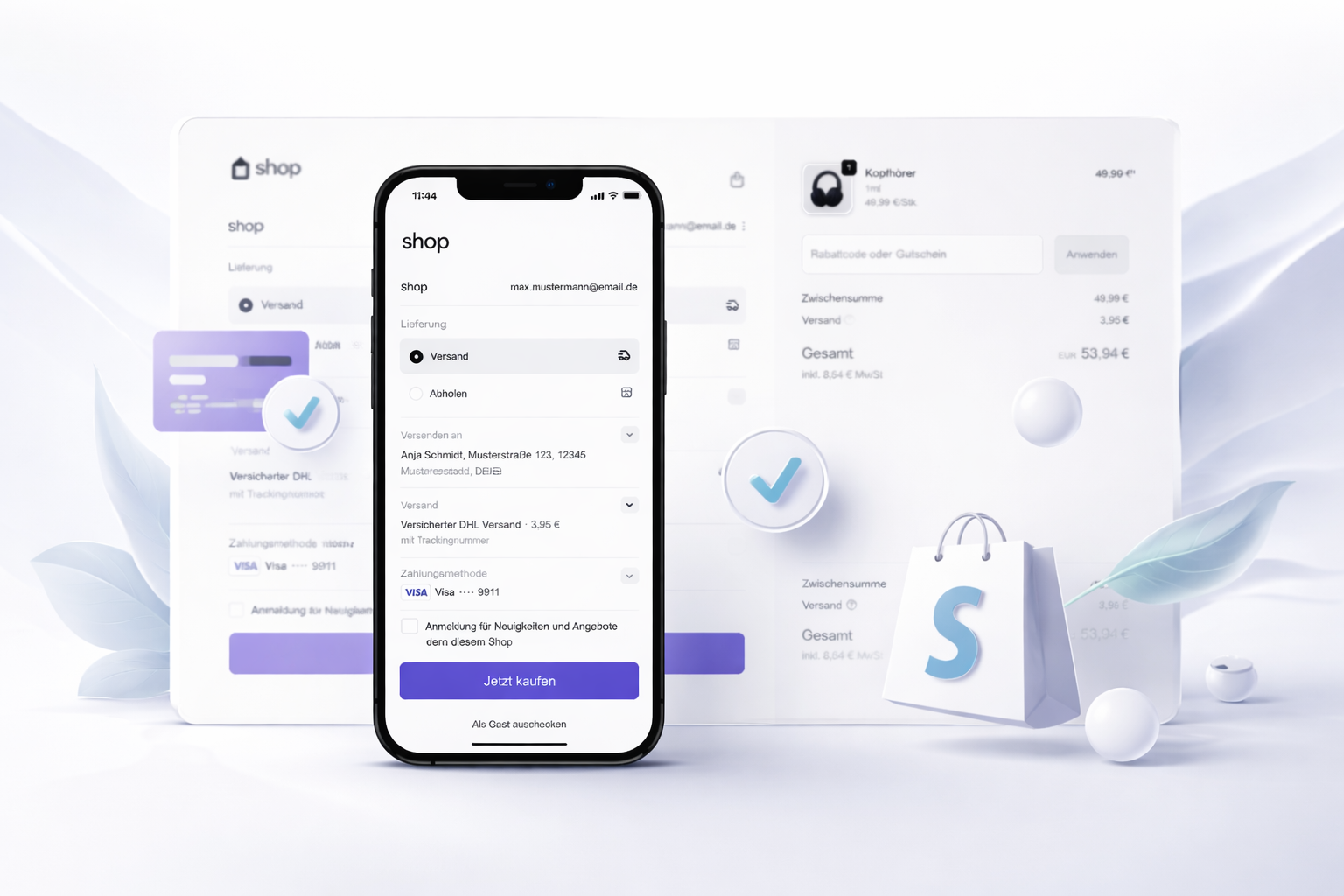
Why Shopify Checkout converts so well — and what other systems don't
Shopify relaunch checklist for decision makers: These points determine success or failure
Shopify SEO 2026: What really ranks — and what you can save yourself
Switching Magento to Shopify: Instructions, Costs & SEO Risks for Companies
Shopify SEO Guide: How to optimize your store with JSON-LD, Structured Data & Liquid Templates
Shopify & GEO: How to optimize your online shop for AI search engines and generative systems
UNHYDE•UNHYDE•UNHYDE•UNHYDE•UNHYDE•UNHYDE•