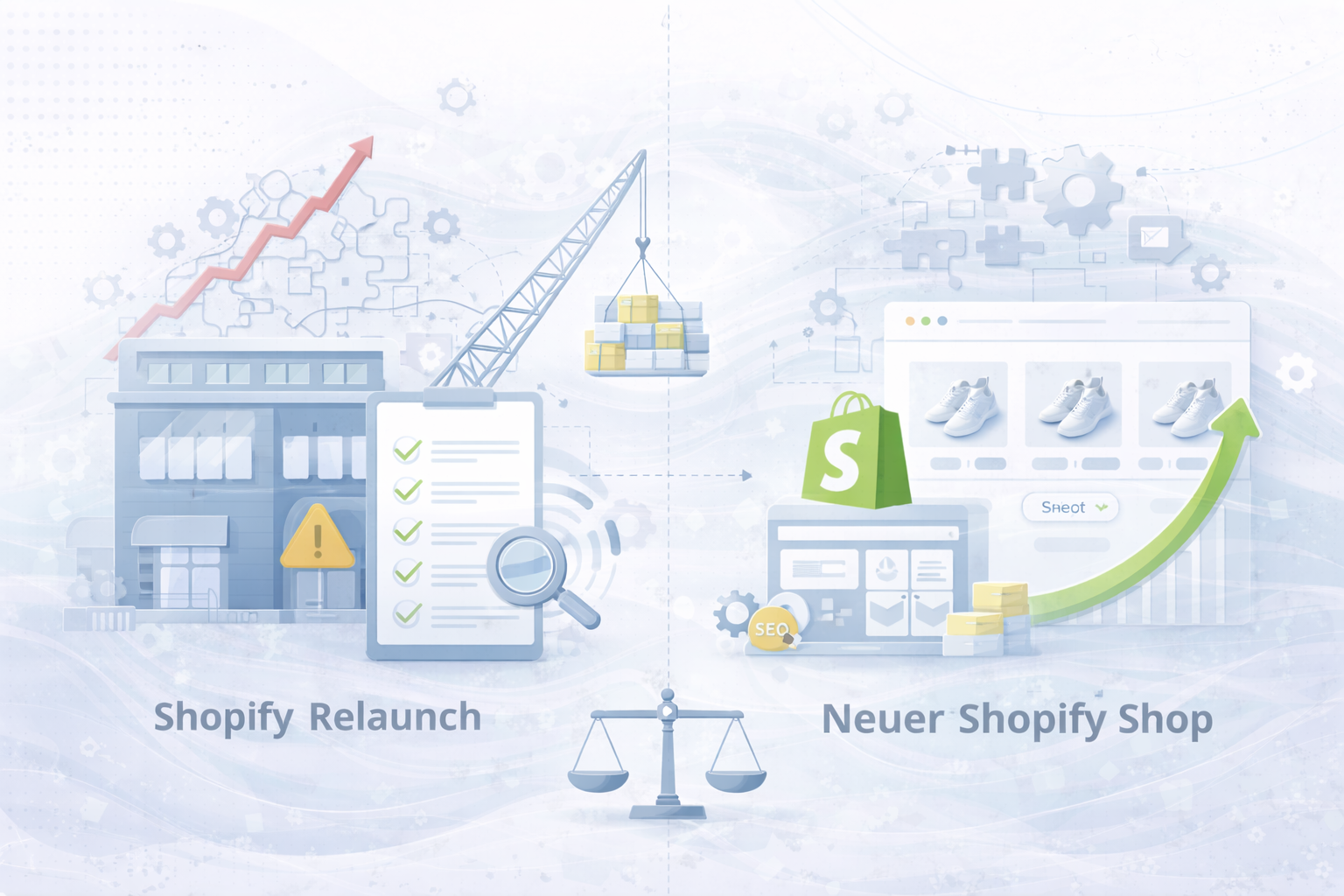
Many companies start with Shopware 6 because it is flexible and has a strong presence on the German market. However, as scaling increases, structural challenges often arise: high development costs, complex maintenance, rising agency costs and performance issues.
Shopify, on the other hand, relies on a clearer system, faster time-to-market and lower technical complexity. The change will therefore be strategically interesting, particularly for growth-oriented brands.
One migration However, it is not just a “system upgrade.” It is a profound intervention in infrastructure, SEO, data structure, and conversion logic.
A change is particularly useful if:
Many companies underestimate how much operational complexity their current system creates. Shopify reduces this complexity — provided that the migration is implemented strategically.
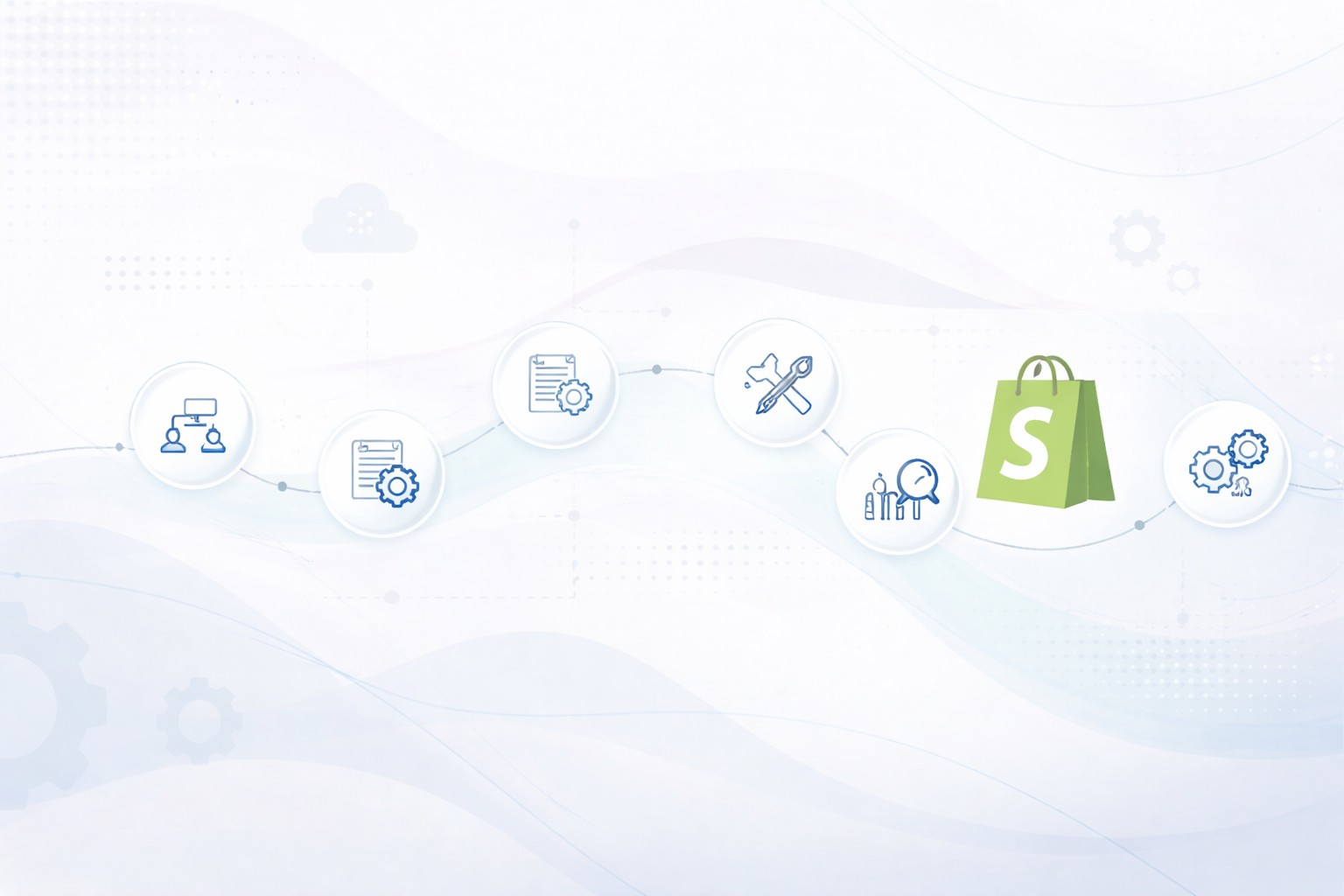
Professional migration takes place in clearly structured phases.
First, a technical analysis of the existing Shopware system is carried out. Data structures, plugins, individual adjustments and SEO rankings are checked. The aim is to identify risks at an early stage.
The new Shopify architecture is then designed. Categories, URL structures, product logic, and redirects must be properly planned so that no visibility is lost.
Only then does the actual data migration begin. Products, variants, customer accounts, orders and content are transferred. At the same time, the new design will be implemented and the technical optimization will take place.
Before go-live, an extensive test phase is crucial. In particular, redirections, tracking, payment providers and checkout processes must work flawlessly.
A migration is not a quick project — but a controlled system change.
.png)
The most common mistake: Redirects are underestimated.
If URL structures are not correctly adopted or redirected via 301 redirection, massive ranking losses can occur. This is particularly critical for organically grown shops with a strong content focus.
Important SEO factors when migrating:
Migration without an SEO strategy can cost visibility in the short term. With professional planning, however, this effect can be minimized — and often even improved.
The costs depend heavily on the scope.
A small shop with a manageable range of products is significantly less complex than a system with:
Typical budget ranges in German-speaking countries are between 15,000€ and 40,000€, depending on complexity and strategic requirements.
It is not only the technical change that is decisive — but also the optimization of the system for future growth.
After the migration, many companies report:
Shopify forces more system clarity — and that is often the growth lever.
Migration becomes problematic when:
A system change is the perfect opportunity not only to swap the backend — but also to optimize the entire digital revenue model.
Are you considering switching from Shopware 6 to Shopify, but are unsure about the effort, risks or budget?
We analyse your existing system, assess SEO risks and show you transparently whether and when a migration is worthwhile for your company.
👉 Arrange a non-binding strategy discussion now.

Get in touch
contact now