initiation

Shopware is one of the most frequently used shop systems in German-speaking countries. For medium-sized companies in particular, it appears flexible, powerful and “made in Germany” at first glance.

Nevertheless, more and more companies are choosing to switch from Shopware to Shopify. Not out of dissatisfaction with individual features, but because e-commerce requirements have changed: Speed, scalability and a focus on growth play a bigger role today than maximum technical freedom.

In this article, you'll learn When is it really worthwhile to switch from Shopware to ShopifyWhat risks exist and what decision makers should definitely pay attention to.

Why companies are leaving Shopware

Shopware is powerful — but it also brings complexity.

Common reasons for switching to Shopify:

  • High maintenance and update costs
  • Dependence on agencies or developers
  • Complex plugin landscape
  • Long development cycles
  • Performance issues as you grow
  • Technical topics block marketing & conversion

👉 Many companies notice: The shop is running — but is slowing down growth.

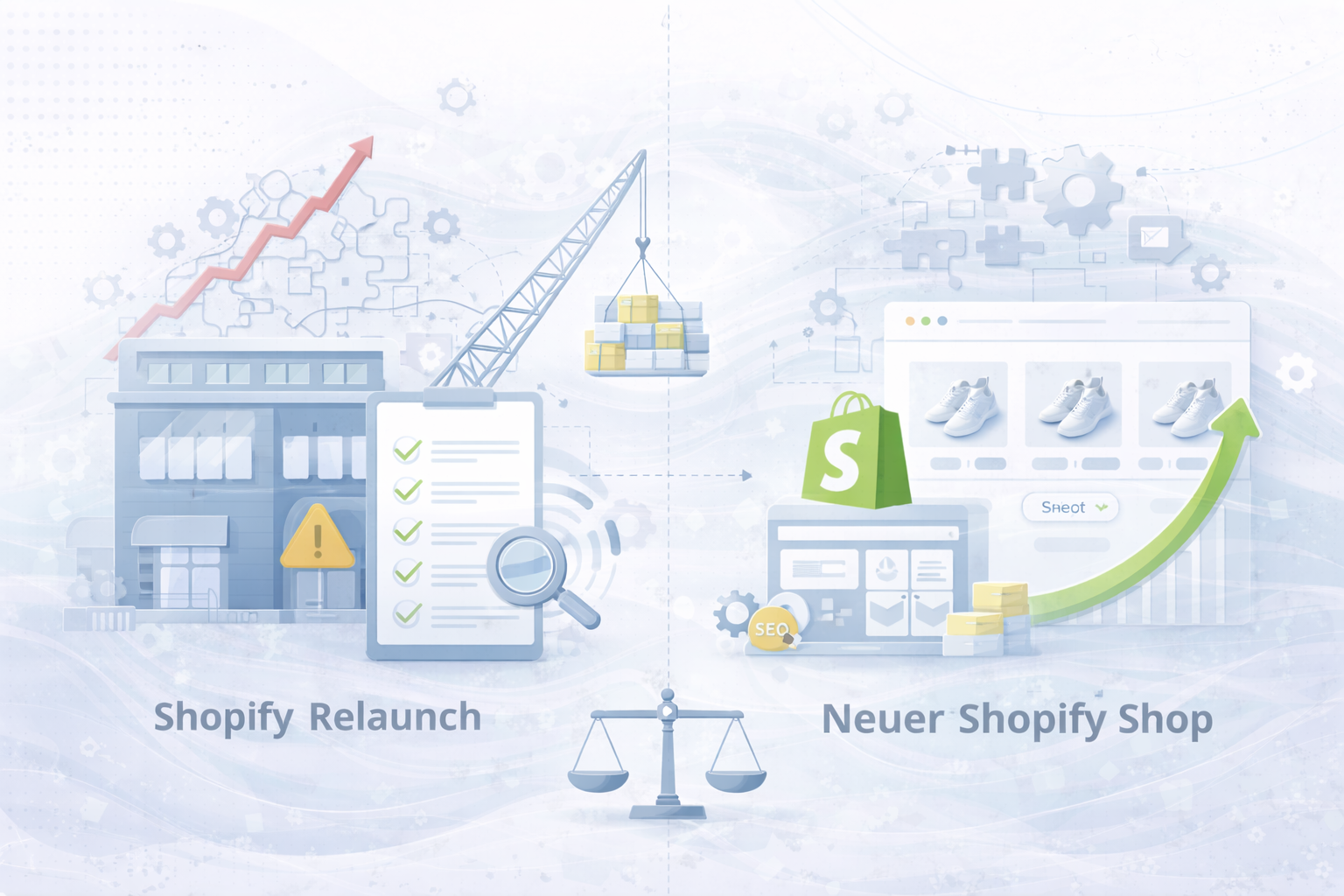
Shopify vs. Shopware: Fundamental Differences

Before you migrate, you should honestly compare the systems.

Shopware:

  • High flexibility
  • open source approach
  • Strong individualization
  • More technical effort
  • Higher running costs

Shopify:

  • SaaS model
  • Quick setup & time-to-market
  • Less maintenance
  • Strong performance
  • Focus on business & conversion

👉 The swap Shopify is usually not a “downgrade”, but a Strategy change.

When is it worthwhile to switch from Shopware to Shopify

Migration is particularly useful when:

  • Your team is heavily dependent on developers
  • new features take too long
  • international scaling is planned
  • Performance & stability are critical
  • Marketing teams should work faster
  • Shopify Plus is becoming relevant in the future

❗️ The switch does not make sense if extremely individual logics are at the core of the business model, which can only be mapped with massive custom code.

Shopware process → Shopify migration

1. Strategic pre-analysis

It is decided here What is really needed:

  • Which Shopware features are business-critical?
  • Which plugins are replaceable or superfluous?
  • What goals should be achieved after migration?
  • Which KPIs are decisive?

👉 Goal: No technical ballast in the new shop.

2. Evaluate data & content

Typical data:

  • Products & variants
  • categories
  • customer accounts
  • orders (optional)
  • Content & CMS pages

Best practice:
Clean up data, simplify structures, optimize content.

3. Shopify Setup & Architecture

The basis for scaling is now being laid:

  • Shopify or Shopify Plus?
  • Standard theme or custom theme?
  • App architecture vs. individual solutions?
  • interfaces (ERP, PIM, CRM, payment)

A well-thought-out setup prevents subsequent modifications.

4. UX, design & conversion focus

Many Shopware shops are functional — but not optimally converting.

  • Clearer navigation
  • Mobile First Design
  • Focus on bestsellers & core products
  • Optimized product detail pages
  • Clear CTAs & trust elements

👉 Shopify migration is a Conversion opportunity, not just a technical project.

5. SEO & redirects (critical point)

Shopware shops often have a solid SEO basis — this must not be lost.

Key points:

  • Full URL mapping
  • 301 redirects
  • Obtaining rankings & backlinks
  • Check meta data & content structure
  • Test technical SEO before go-live

SEO losses can be avoided — but only with proper planning.

6. Testing, Go-Live & Monitoring

Before launch:

  • functional testing
  • Checkout testing
  • Tracking & Analytics
  • Mobile & performance checks

After launch:

  • Ranking monitoring
  • Conversion analytics
  • Iterative optimization

Costs: What does the cost Switching from Shopware to Shopify?

The costs depend heavily on the project scope:

  • Smaller shops: starting at approx. 12,000 — 20,000€
  • Medium-sized projects: 20,000 — 35,000€
  • Complex setups/Shopify Plus: €35,000+

Cost factors:

  • amount of data
  • SEO complexity
  • Design & UX
  • Interfaces & individual developments

Typical Shopware mistakes → Shopify migrations

  • Want to transfer Shopware logic 1:1
  • Too many apps without architecture
  • Pay attention to SEO just before going live
  • No clear definition of goals
  • Lack of post-optimization

These mistakes cost Performance, rankings and revenue.

conclusion

Switching from Shopware to Shopify is not a technical step backwards, but a step back for many companies strategic step towards growth, speed and focus. Anyone who thinks of migration, SEO and conversion together creates a stable basis for the next few years.

🚀 Migrate Shopware to Shopify professionally

Are you considering switching from Shopware to Shopify, or would you like to know whether the migration is worthwhile for your company?

👉 Here you can find our Shopify services

👉 more about Shopware to Shopify migration

We support Shopware to Shopify migrations strategic, clean and performance-oriented.

Shopware 6 to Shopify migration: process, costs, SEO risks and when the switch is really worthwhile
Shopify vs. WooCommerce vs. Shopware: Which system really suits which business?
Planning a Shopify migration: The ultimate checklist for companies (including SEO backup)
Shopify migration without loss of ranking: How to keep your SEO traffic stable
Shopify product analysis: More trust & conversions with real-time data and social proof
Category pages as revenue levers: Why they are more important than product pages in e-commerce
Shopify SEO Guide: How to optimize your store with JSON-LD, Structured Data & Liquid Templates
Shopify & GEO: How to optimize your online shop for AI search engines and generative systems
UNHYDE•UNHYDE•UNHYDE•UNHYDE•UNHYDE•UNHYDE•