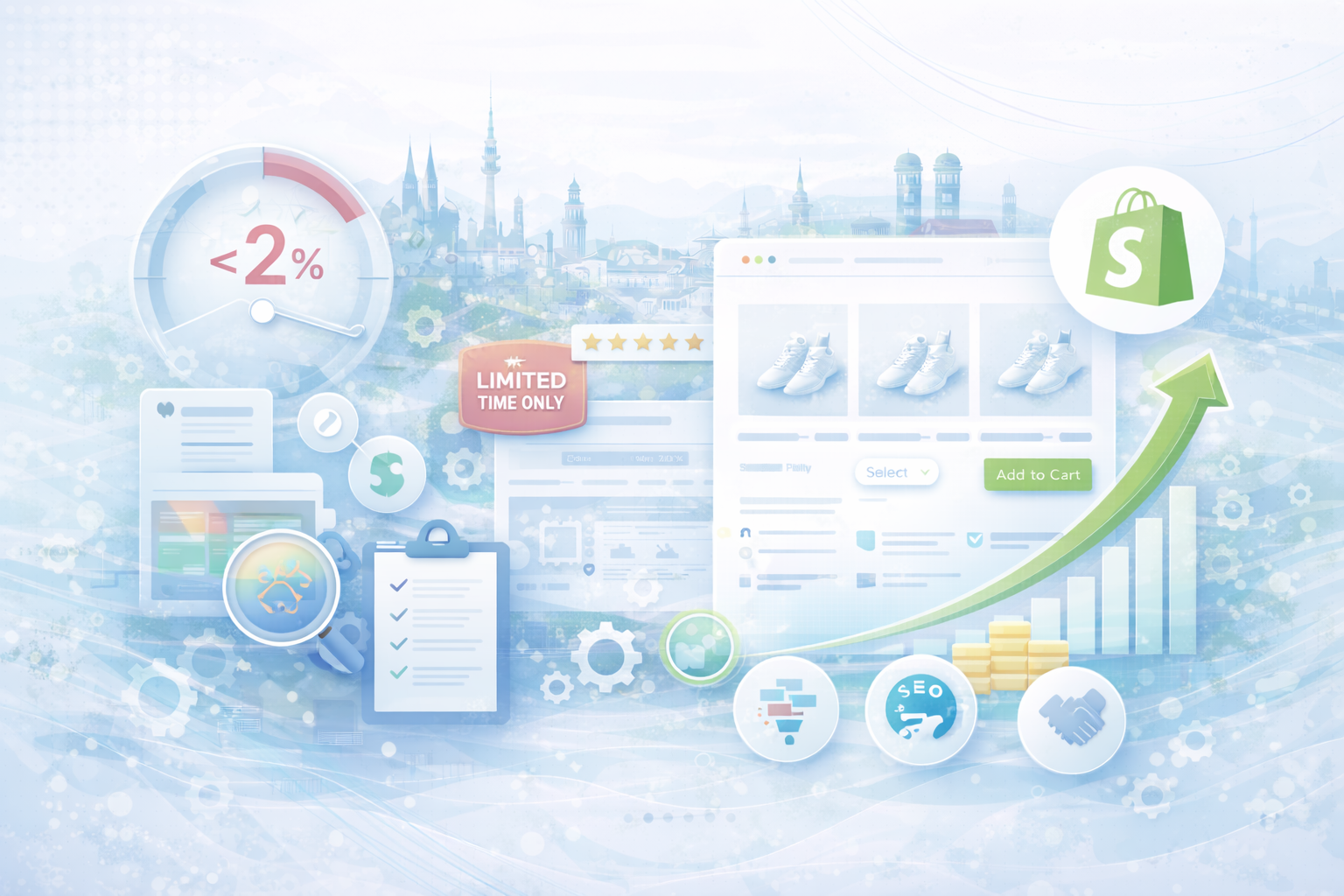
Many Shopify stores aren't struggling with too little traffic — but with too little conversion. One Shopify conversion rate less than 2% This is not an exception in the DACH region, but in most cases it is a clear sign that there is potential for structural optimization.
Depending on the industry, realistic e-commerce benchmarks range between 2.5% and 4%. Strong brands with clean UX, clear positioning and optimized checkout sometimes achieve even higher scores. If your shop is significantly below that, an in-depth analysis is worthwhile.
Conversion optimization doesn't start with colors or buttons — it starts with clarity.
The most common cause is a lack of focus. Users must understand within a few seconds What they get here, who the product is for and why they should buy right here. If this message is not immediately tangible, a large proportion of visitors leave the shop — long before they deal with what's on offer.
In addition, there is often an overloaded start page. Too many visual stimuli, a lack of hierarchy or no clearly placed call-to-action mean that users are unable to orient themselves intuitively. Good conversion is achieved by Leadership — not through complexity.
Another factor that is often underestimated is performance. Shopify is technically sound, but many stores are slowed down over time by numerous apps and scripts. Just an additional second of loading time can significantly reduce the conversion rate. Speed is decisive for turnover, particularly mobile.
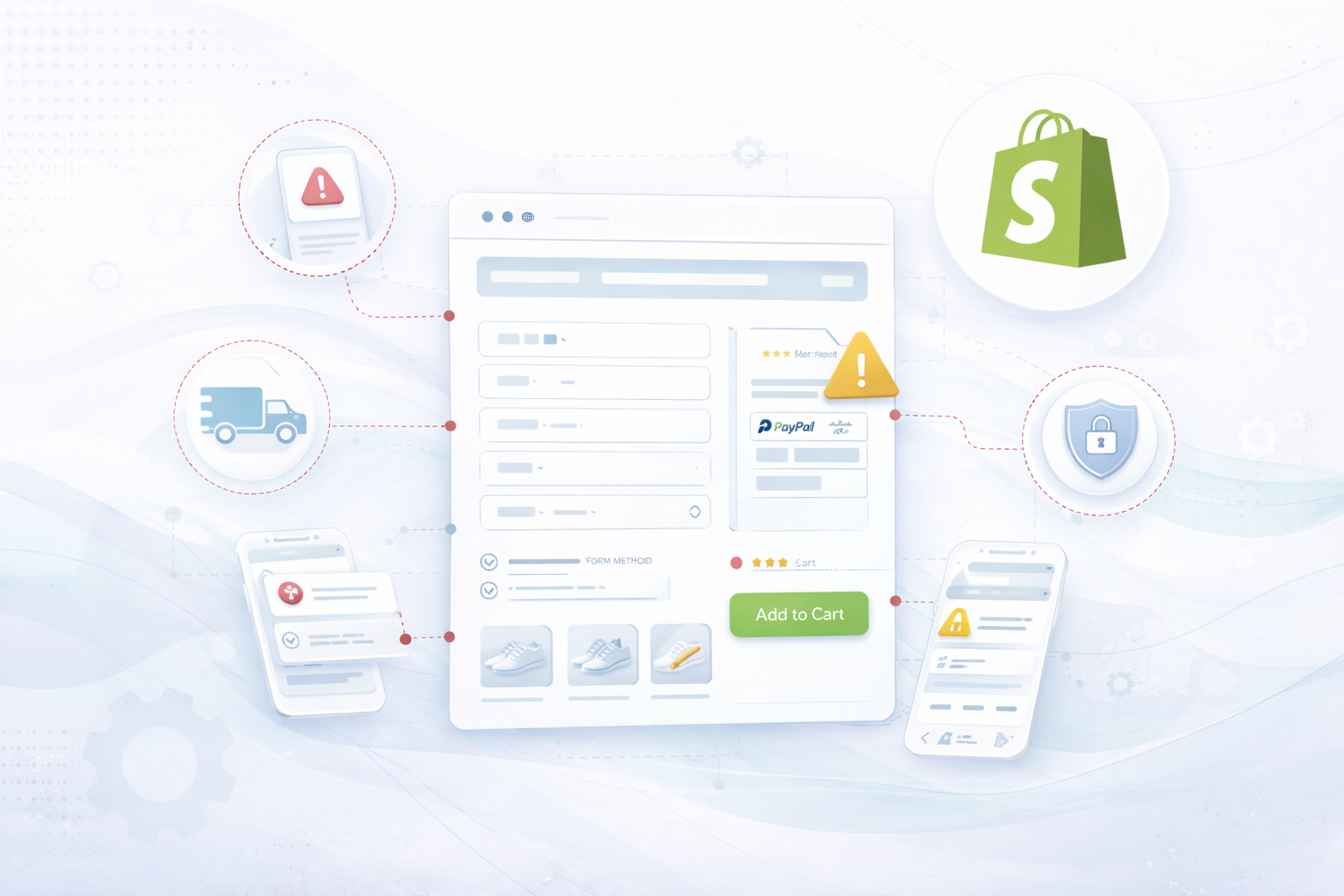
Even when product pages are convincing, many purchase processes break down at the checkout. Account pressure, too many form fields or lack of express payment options such as Apple Pay or PayPal lead to unnecessary friction.
Especially for mobile users — who now account for the majority of traffic — the checkout must radically simplified be. Every unnecessary hurdle costs conversion.
An optimized checkout is not a detail, but a direct revenue lever.
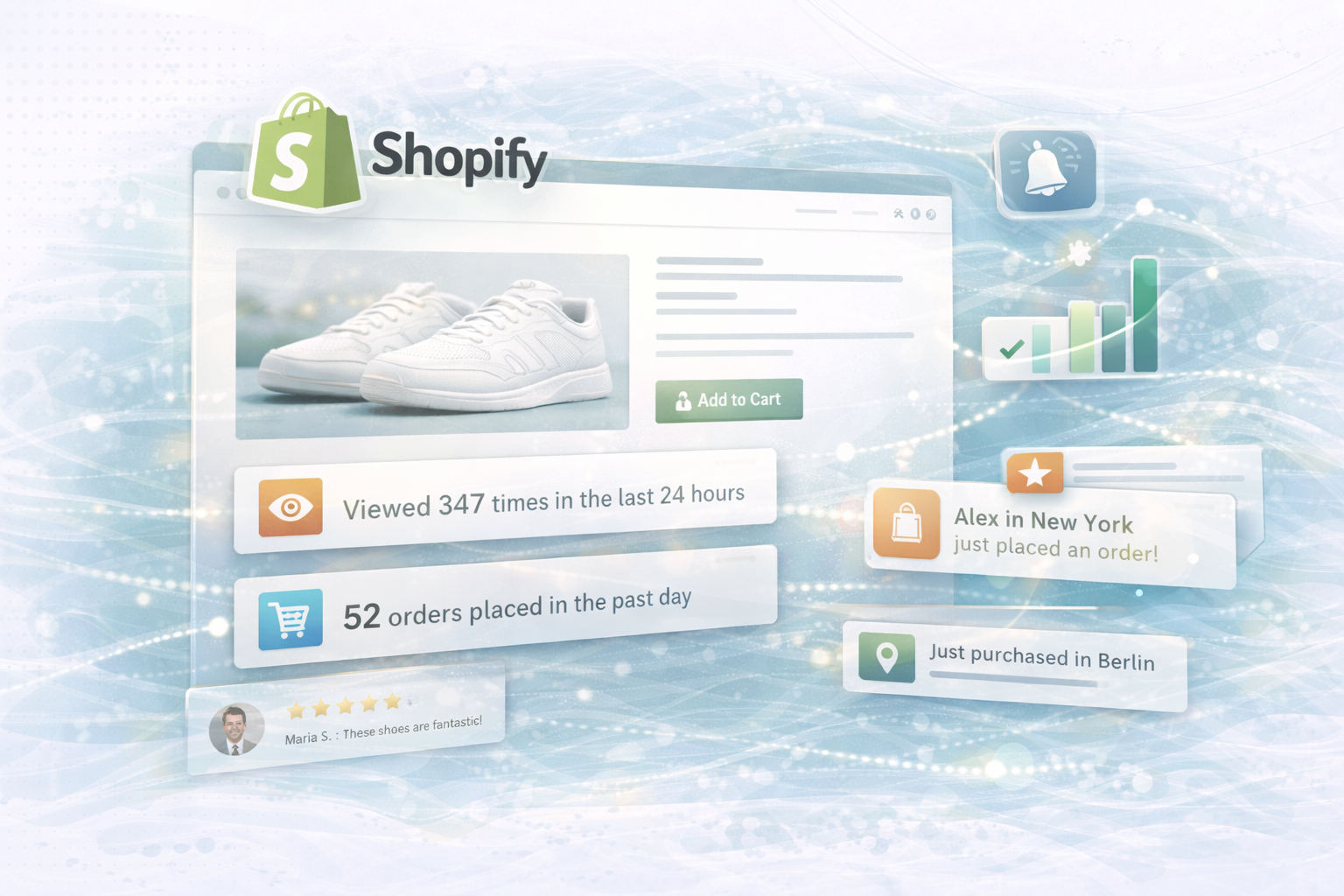
Successful Shopify stores work with psychological triggers. Trust is created by Social proof, real customer testimonials, security signals and transparent communication. Urgency or scarcity can speed up buying decisions — if they are used authentically.
An optimized product page does not tell a technical specification — it subconsciously answers the question:
“Why should I buy this now? ”
Conversion occurs when benefits are communicated more clearly than functions.

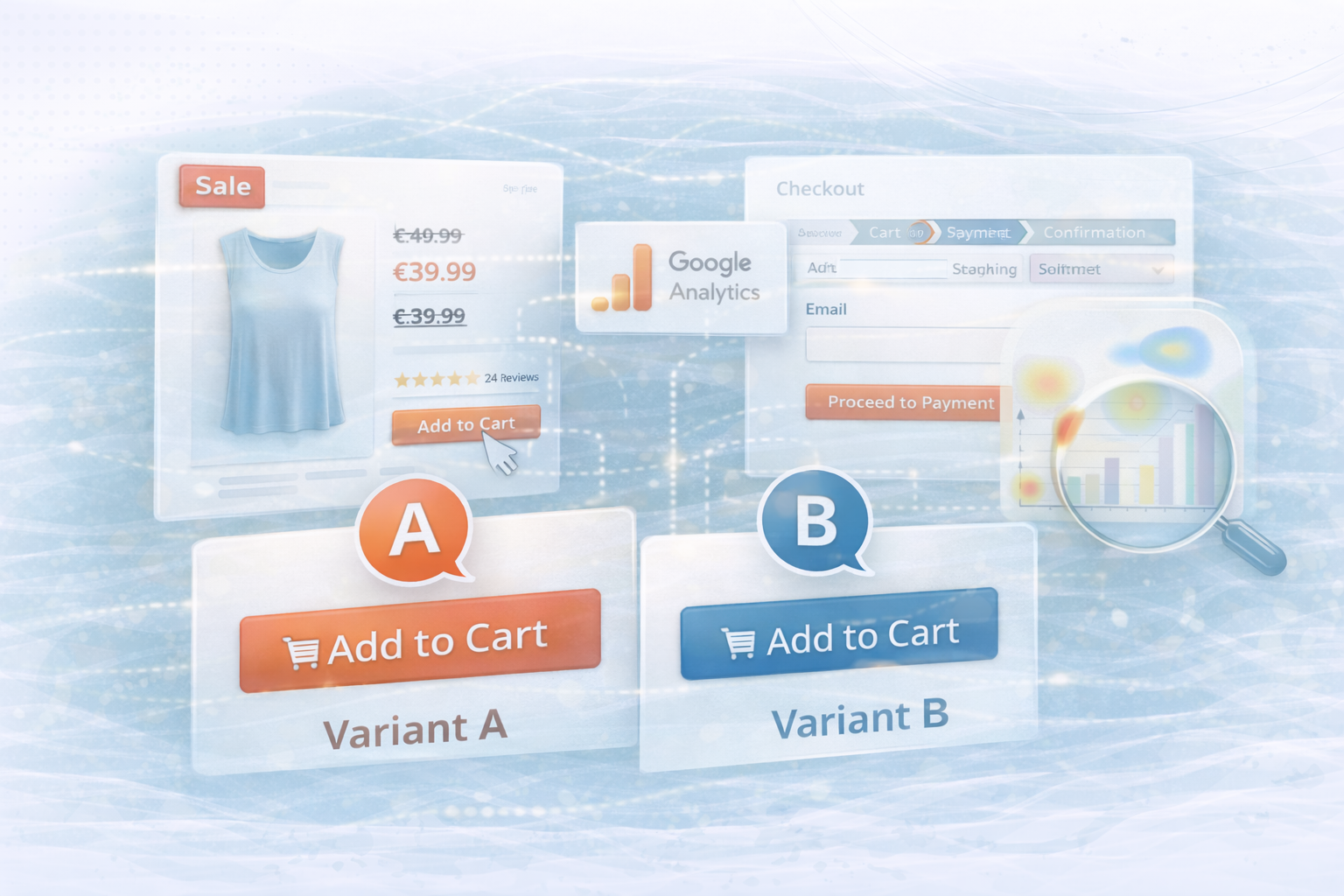
Many shops optimize based on feeling. But without data, conversion optimization remains pure speculation. Heatmaps, scroll tracking and funnel analyses clearly show where users jump off and where friction occurs. Only when these patterns are visible can targeted measures be derived.
It is often small structural adjustments — better hierarchy, clearer benefit reasoning, reduced distraction — that enable significant sales increases.
Measurability is the basis of any sustainable Shopify conversion optimization.
.png)
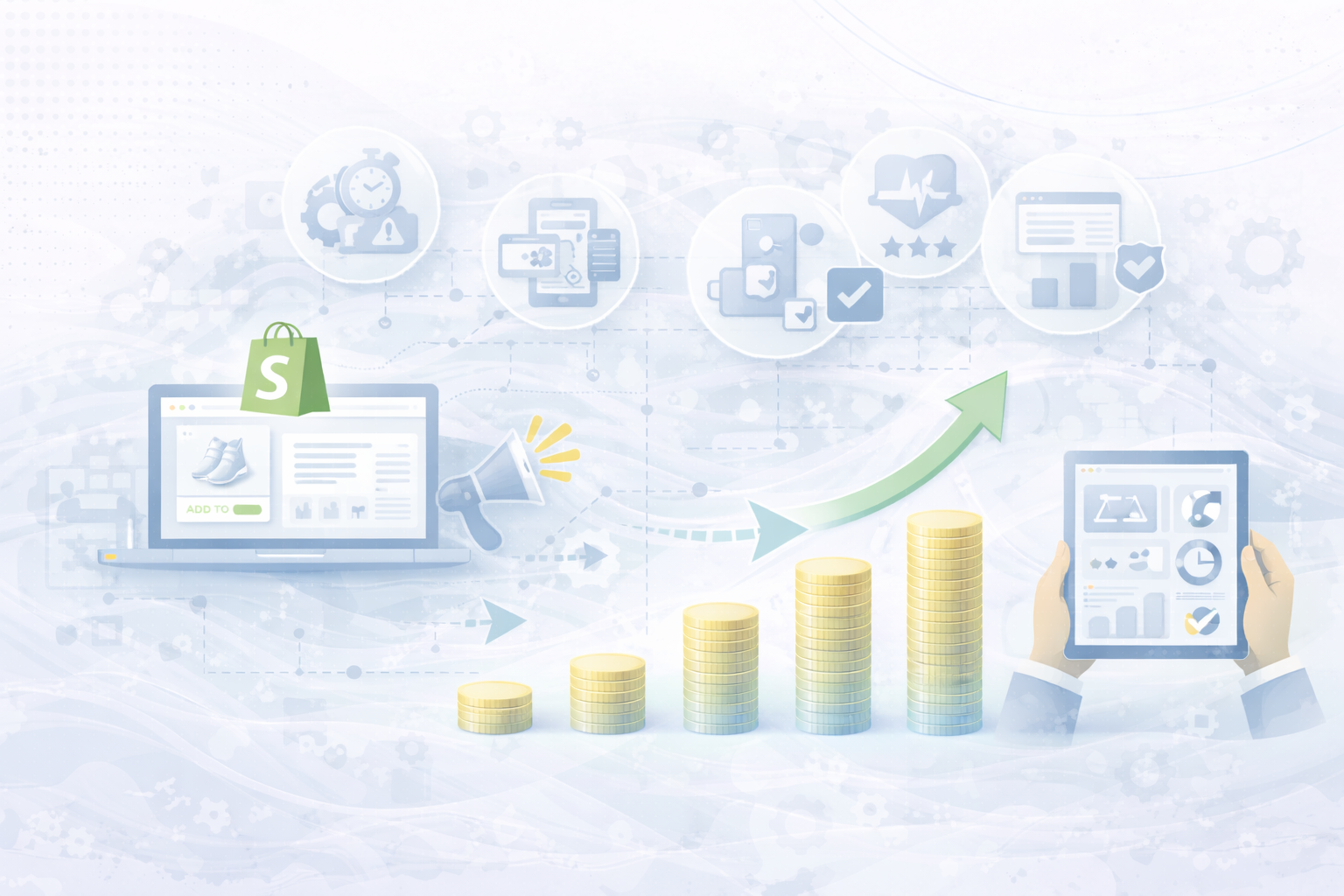
A Shopify store that currently converts below 2% can often, through systematic optimization, on 3% or more be increased. With high traffic, this quickly equates to five or six-figure additional sales per year — without an additional advertising budget.
Conversion optimization is therefore not a cosmetic project, but a strategic revenue decision.
If your shop is already generating traffic, paid ads running, or scaling is planned, a well-founded analysis is particularly worthwhile. The larger the volume, the more effective each percentage improvement is.
A structured analysis comprises:
Sustainable conversion can only be achieved when these areas work together.
Would you like to know why your shop is below 2% — and how much revenue potential it actually has?
We analyze your Shopify store holistically and identify the structural levers that can sustainably increase your conversion.
👉 Arrange a non-binding conversation now and find out what is growing in your shop.

Get in touch
contact now