People don't buy rationally.
They buy out of emotions, habits, uncertainties and inner considerations — and justify their decision rationally only in retrospect.
This is exactly where it is decided whether a Shopify shop sells or not.
Not through more features, but through psychologically clean user interface.
In this article, we'll show you 9 psychological principlesthat really influence e-commerce buying decisions — and how you can make them You can use it specifically in your Shopify shopwithout coming across as manipulative or untrustworthy.
Each page in your shop subconsciously answers one of these questions:
👉 If your store has these questions not answered clearly, the customer decides not to buy — even with a good product and a good price.
.png)
People only buy when they feel safe.
Typical Shopify levers:
👉 Without trust, any conversion optimization is ineffective.
People want to avoid losses — more than make profits.
Used cleanly in Shopify:
❗️ Important: No shortage of fake products — this destroys trust.
“When others buy, it can't be wrong. ”
Shopify samples:
👉 Social proof massively reduces uncertainty.
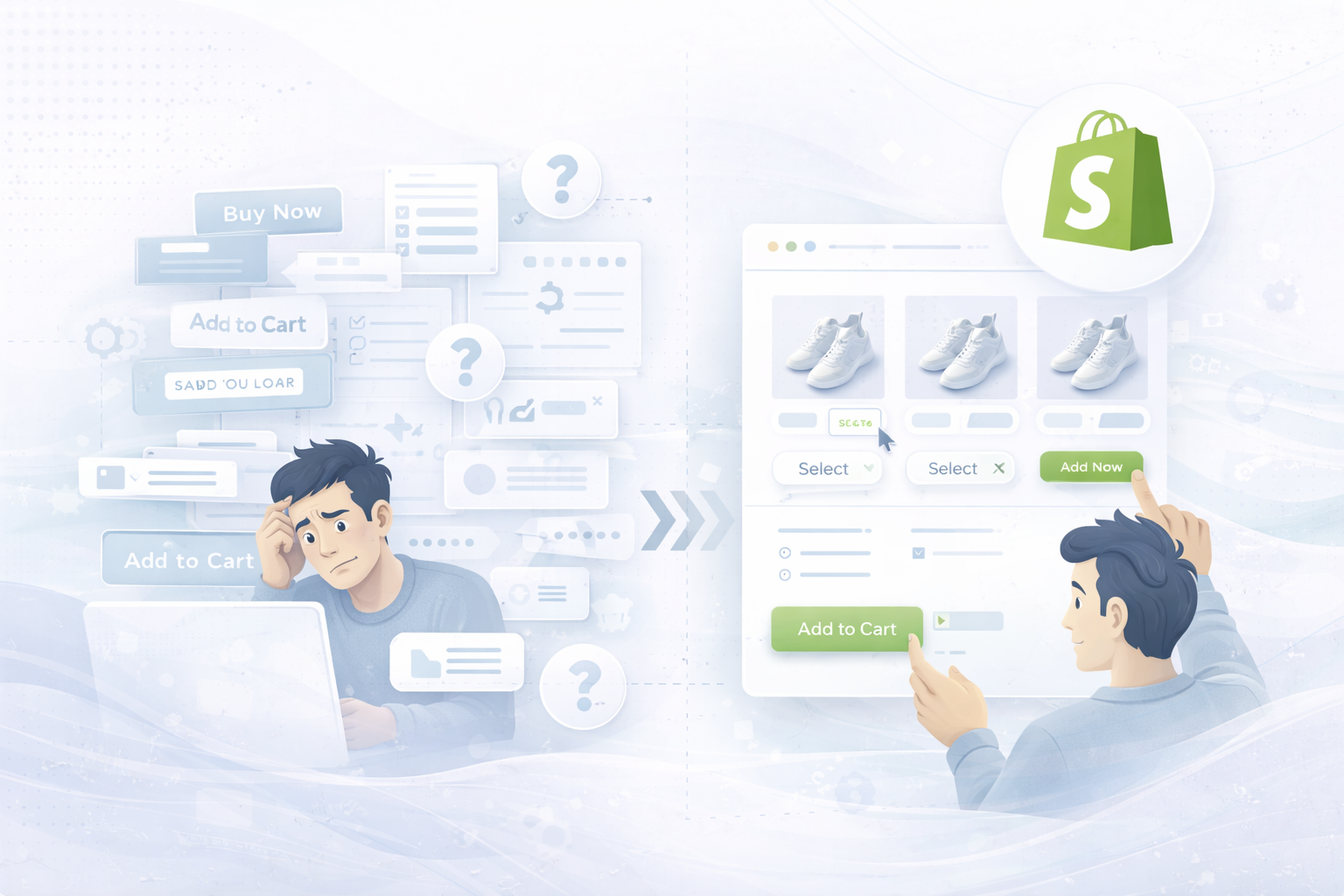
The more a user has to think, the lower the conversion.
Typical mistakes:
Better:
Customers don't buy features — they buy solutions.
Bad description:
“Made from 100% cotton”
Good description:
“Comfortably soft — no sweating, no scratching”
👉 Shopify product pages should use translating, do not enumerate.
Too many options lead to indecision.
Shopify lever:
Fewer choices = higher conversion.
The price itself is often secondary — the decisive factor is How it is perceived.
Psychological levers:
👉 Context sells — not the price alone.
People don't like surprises.
Typical Shopify errors:
👉 Consistency creates security — security creates purchases.
Anyone who gets value is more willing to buy.
Shopify samples:
👉 Added value before the purchase increases closing rates.
Psychology only works if it honest and user-centered is used.
Successful Shopify stores don't sell through print, but through Understanding human decisions.
Anyone who uses these psychological principles in a targeted manner increases conversion rates sustainably — without discount battles or aggressive tricks.
Would you like to know which psychological levers are currently missing in your Shopify shop?
👉 Here you can find our Shopify services
We optimize Shopify stores strategic, psychologically based and data-based.

Get in touch
contact now