Shopify or Shopify Plus — which version really suits your business?

At some point, many growing e-commerce companies are faced with a central question:

Is the normal Shopify plan enough — or is it time for Shopify Plus?

The problem:
The decision is often made on the basis of features — not on the basis of economic efficiency.

But Shopify Plus isn't just a feature upgrade.
It is a strategic scaling decision.

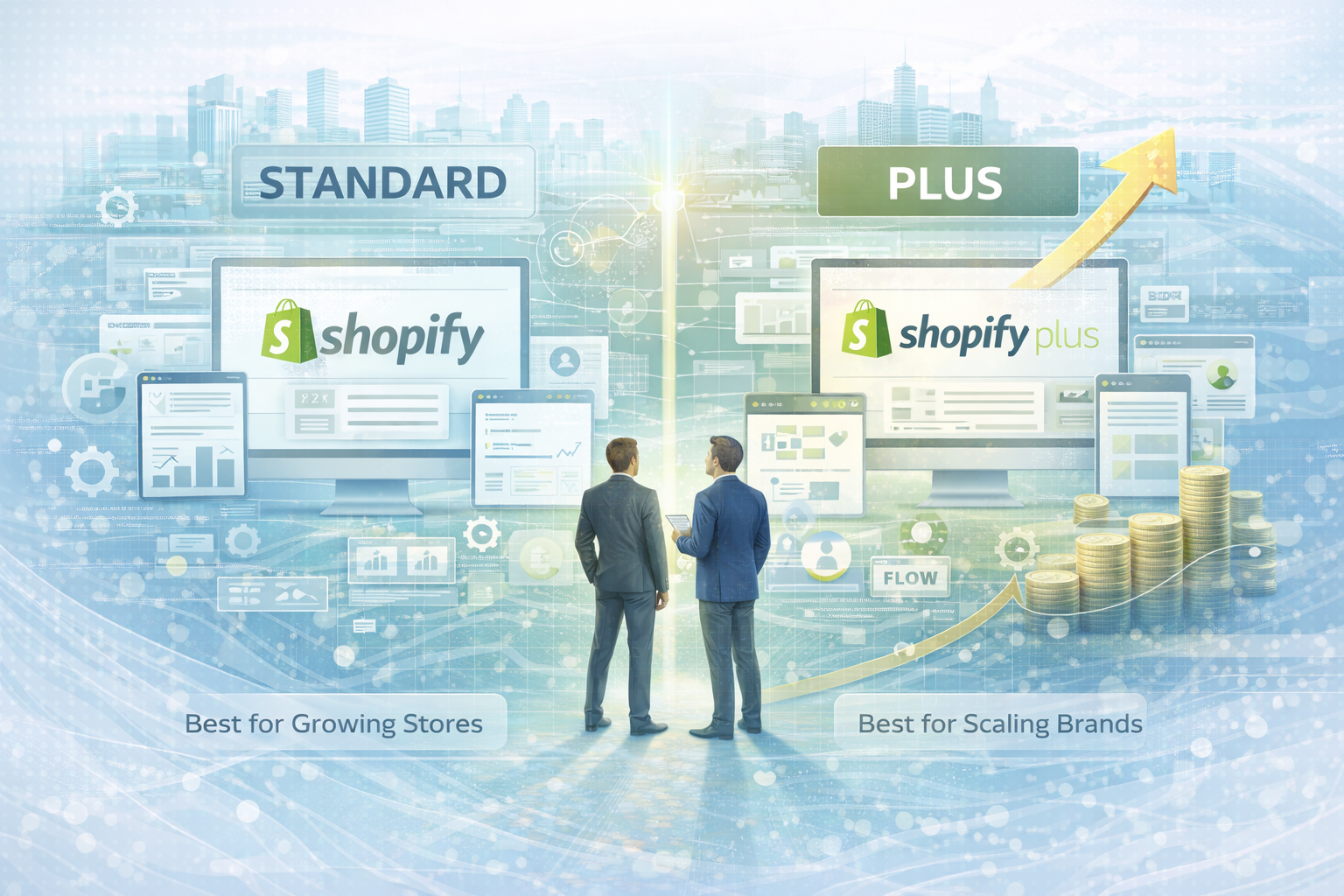
The fundamental difference between Shopify and Shopify Plus

Standard Shopify is ideal for:

  • small to medium-sized shops
  • clearly structured product catalogs
  • simple international markets
  • D2C models
  • low system complexity

Shopify Plus, on the other hand, is aimed at:

  • rapidly growing brands
  • international multi-market structures
  • B2B models
  • complex integrations
  • high automation requirements

The difference lies less in “more functions” — but in more control, more scalability, and more automation.

The economic perspective: When does Shopify Plus start to make sense?

The decisive question is not:

“Which features do I need? ”

But:

“At what level of turnover or complexity does Plus generate real added value? ”

In practice, it is often found that:

  • Standard Shopify is usually sufficient for less than €1 million in annual turnover.
  • Between 1—3 million euros, the balance starts to become relevant.
  • Plus can bring structural benefits from €3-5 million in turnover.

But turnover alone is not a sufficient indicator.

The decisive factors are:

  • number of markets
  • Traffic spikes
  • Complexity of pricing logic
  • integrations (ERP, CRM, PIM)
  • Automation requirement
  • team structure

The biggest lever: Checkout & Conversion

One of the strongest arguments for Shopify Plus lies in the checkout.

With Shopify Plus, individual checkout extensions are possible — which can lead to noticeable conversion increases for larger stores.

If a conversion increase of just 0.5% is achieved with an annual turnover of €5 million, the upgrade can already pay for itself.

That is the level at which the decision should be made.

Automation as a factor of scale

With Shopify Flow and extended API limits, processes can be automated:

  • segmentation
  • Customer logics
  • Fulfillment processes
  • marketing workflows
  • B2B pricing rules

The bigger the company gets, the more valuable process automation becomes.

Plus not only saves time — it reduces operational errors.

When standard Shopify is completely sufficient

Upgrading doesn't make sense if:

  • Product market fit is not yet stable
  • Conversion basics are not optimized
  • Internationalization is not planned
  • The team is small
  • The system landscape remains simple

Plus does not automatically make an inefficient setup efficient.

Plus as a strategic platform — not as a status symbol

Many companies upgrade for reasons of prestige.

But Shopify Plus isn't a seal of approval — it's a tool.

It is only worthwhile if:

  • clear growth targets are defined
  • Scaling is planned
  • Processes should be automated
  • Internationalization is implemented in a structured manner
  • B2B models are integrated

Without a strategic roadmap, the potential remains untapped.

Decision checklist: upgrade or not?

An upgrade makes economic sense if at least three of these points apply:

  • Annual turnover > 2—3 million €
  • Internationalization planned
  • B2B functionality required
  • Checkout adjustment strategically relevant
  • complex integrations available
  • internal growth team established

If these factors are not met, Standard Shopify is usually the more rational choice.

🚀 Make a well-founded Shopify Plus decision

Are you unsure whether Shopify Plus makes economic sense?

We analyse your current structure, revenue development, system complexity and growth goals — and give you a clear recommendation as to whether Plus makes strategic sense or not.

👉 Check upgrade potential now.

👉 Discover our Shopify services

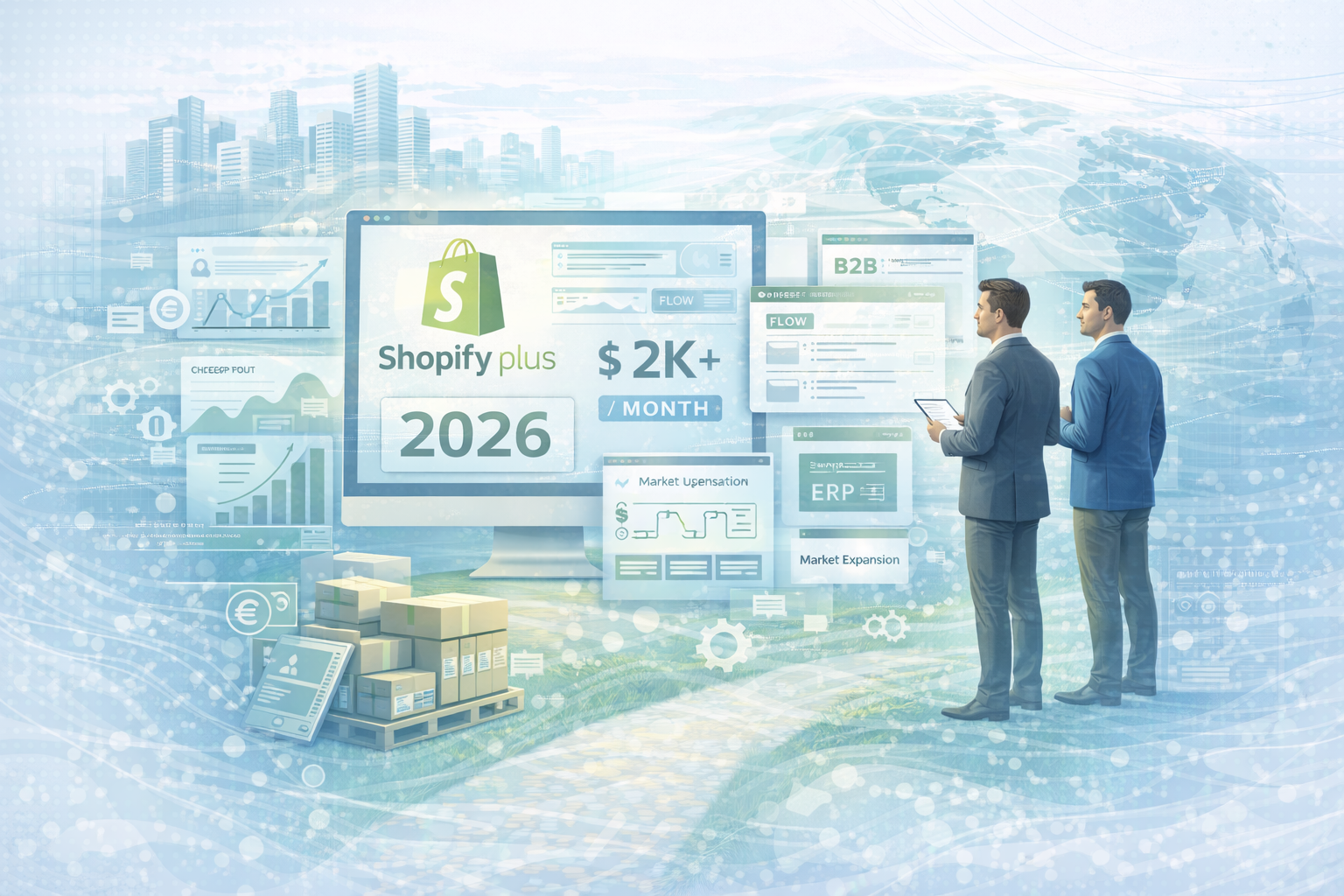
Shopify Plus costs 2026: Is the upgrade really worth it?
Conversion optimization for Shopify: 12 levers that instantly increase your sales
Shopify conversion rate below 2%? Causes, benchmarks and concrete solutions for more sales
Shopify & GEO: How to optimize your online shop for AI search engines and generative systems
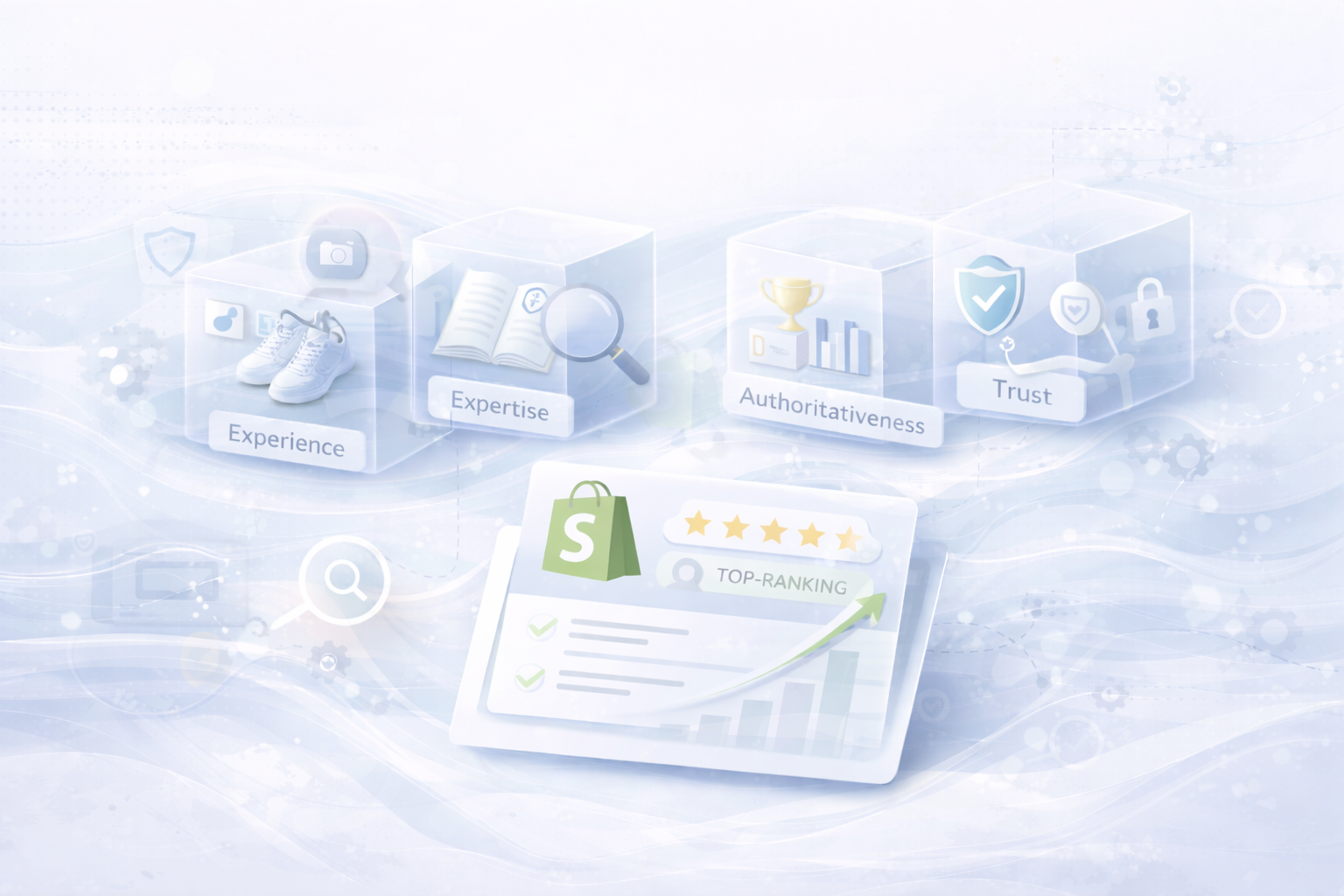
Shopify SEO with E-E-A-T: How to rank on Google in the long term with Experience, Expertise, Authoritativeness & Trust
Shopify Case Study: How QS went live as a D2C brand in just 6 weeks — despite corporate structures
Shopify store slow? How to sustainably optimize page speed, performance and load times
UNHYDE•UNHYDE•UNHYDE•UNHYDE•UNHYDE•UNHYDE•